

Most houseplants come home in a thin plastic nursery pot. It does its job, but it rarely matches the room.
A water hyacinth plant basket solves that in a simple way. You keep the plant in its nursery pot and drop it into a handwoven basket, so the plastic disappears and the plant gains a warm, natural frame.
The catch is water. Water hyacinth is a dried plant fiber, and it does not like sitting wet. Used the right way, a woven basket and a living plant get along well. Used the wrong way, the bottom of the basket can stain, soften or grow mold.
Below is everything you need to know about plant baskets: how to style them so the weave stays protected from moisture, and how to choose the right size to make your plant corner feel warmer and more inviting.
Plant Basket, Pot Cover or Planter: What’s the Difference?
The three terms get mixed up in product listings, but they describe different ways of holding a plant. Knowing which one you are buying tells you how much water protection you need to add.
| Term | What it is | Soil goes directly inside? | What you add |
| Plant basket | A woven basket used to hold a potted plant | No | A nursery pot plus a saucer or liner |
| Pot cover (cachepot) | A decorative outer shell that hides a plain pot | No | A saucer or waterproof inner pot |
| Planter | A container built to hold soil and roots | Yes, if it has a sealed lining and drainage | Depends on the build |
Most water hyacinth pieces sold for plants are plant baskets or pot covers. Some come with a plastic lining stitched or coated inside, which helps, but even a lined basket works best with the plant kept in its own pot.
Why Water Hyacinth Suits Indoor Plants, and Where It Falls Short
Water hyacinth stems are dried, then braided or coiled by hand into baskets. That process gives the material a few qualities that pair well with greenery.
- Warm, natural tone. Shades from pale straw to honey brown sit comfortably next to green leaves, terracotta and wood.
- Lightweight. An empty basket adds very little weight, so moving a large plant to the sink or a sunnier window stays manageable.
- Breathable weave. Air moves through the braid, which helps a slightly damp surface dry faster than it would inside a solid ceramic cover.
- Soft, textured surface. The rope-like braid adds texture to a room full of smooth pots and hard furniture.
- Made from a fast-spreading plant. Water hyacinth is harvested from waterways where it grows quickly, so turning it into home goods gives it a practical use.
The honest limit is moisture. Dried plant fiber absorbs water, and fiber that stays damp for days can darken, lose stiffness or develop mold. Large manufacturers that sell water hyacinth pieces give similar advice: keep them in dry, indoor spaces and wipe them rather than soak them.
The Pot-in-Basket Setup: How to Use a Plant Basket Safely
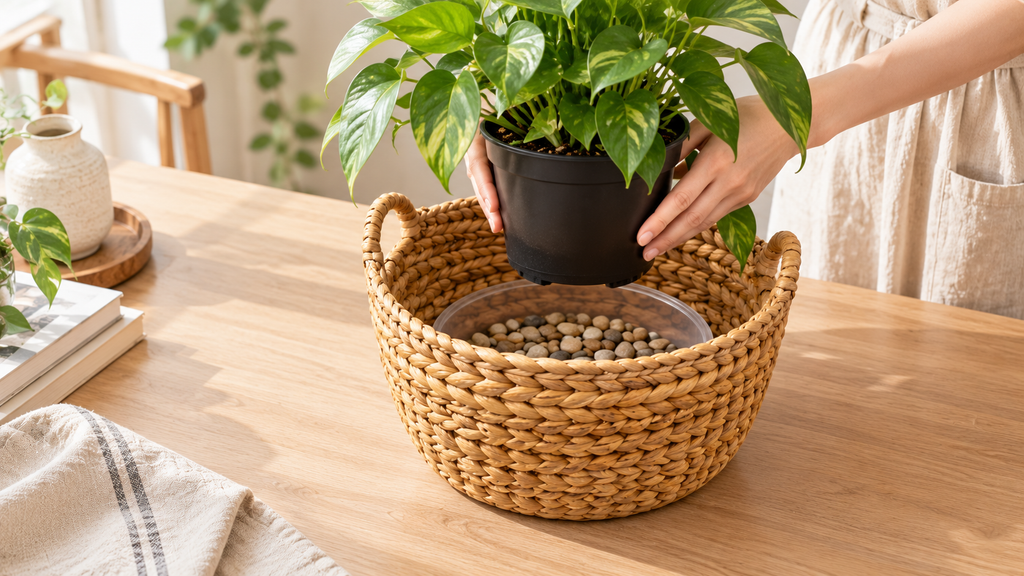
The safest way to use a water hyacinth plant basket is to keep three layers apart: the plant in its pot, a waterproof barrier, then the basket. Each layer has one job.
- Keep the plant in its nursery pot. The plastic pot has drainage holes and holds the soil. Repot into a larger nursery pot if the roots are crowded, but do not tip soil straight into the basket.
- Add a waterproof saucer or inner pot. Place a plastic or glazed saucer in the base of the basket. A plain plastic pot without holes, one size up from the nursery pot, also works as a full inner liner.
- Lift the pot slightly if you can. A few pebbles, a small upturned lid or plant pot feet under the nursery pot keep it from sitting in runoff.
- Leave a small gap at the sides. A little space between the pot and the weave lets air circulate and makes the pot easy to lift out.
- Hide the rim, if you like. A layer of preserved moss or a few dried leaves on top covers the plastic edge. Keep it loose so you can still check the soil.
How to Choose the Right Water Hyacinth Plant Basket
Measure the pot before you shop. Most fit problems come from guessing.
1. Diameter
Measure across the top rim of the nursery pot, then look for a basket with an inside opening about 1 to 2 inches (2.5 to 5 cm) wider. That leaves room for your fingers when you lift the pot out, plus a little airflow. Remember that a thick braid takes up space, so check the inside measurement when a listing gives it.
2. Height
For a clean look, the basket rim should sit level with the pot rim or slightly above it. If the basket is too deep, raise the pot on a block or upturned saucer. If it is too shallow, the plastic shows.
3. Shape
- Round baskets suit most single plants and look balanced from every side.
- Tapered or belly shapes are good for tall, upright plants because the wider base feels steady.
- Rectangular or oval baskets can hold two or three small pots in a row on a windowsill or console.
4. Weave
A tight, dense braid hides the inner pot completely. An open lattice weave shows a little of what is inside but lets more air through, and it reads more like a decor piece. If you choose an open weave, a neutral inner pot keeps the look tidy.
5. Handles
Handles are worth having on anything that will hold a medium or large plant. Woven-in or cut-out handles make it easier to carry the whole basket to the sink. Lift from the base when the plant is heavy, so the handles are not taking all the weight.
Where a Water Hyacinth Plant Basket Works Best
Placement matters as much as setup. A basket in a bright, dry room will stay in better shape than one in a damp corner.
Good spots
- Living room floor: a large basket holding a floor plant softens a corner and fills the space next to a sofa or reading chair.
- Bedroom: a medium basket on a dresser or nightstand adds a calm, natural touch.
- Home office: a small basket keeps a desk plant tidy and catches stray soil.
- Entryway or console table: a rectangular basket can hold a row of small pots.
Spots to think twice about
- Bathrooms with poor ventilation: steam and slow drying are hard on natural fiber. A bathroom with a window or a good fan is a better candidate.
- Directly against a cold window or radiator: condensation on one side and heat on the other can stress both the plant and the weave.
- Outdoors, including covered porches: rain, dew and humidity swings are too much for an unsealed basket.
Plants that pair easily
Plants that like to dry out between waterings are the easiest match, because the pot spends less time wet. Snake plant, ZZ plant, pothos, cast iron plant, and many succulents and cacti fall into this group.
Thirsty plants such as ferns, calatheas or peace lilies can still live in a basket. They just need the full saucer or inner pot setup and a little more attention after watering.
Watering and Care: A Simple Routine
The easiest habit is to take the plant out to water it. It adds a minute and keeps the basket dry.
- Lift the nursery pot out and carry it to the sink or tub.
- Water thoroughly and let it drain for 10 to 15 minutes, until drips stop.
- Wipe the pot base and empty the saucer before putting everything back.
If lifting is not practical for a heavy floor plant, water slowly in smaller amounts and check the saucer 30 minutes later. Empty any standing water with a turkey baster or a cloth.
Monthly check
- Look inside the base for dark spots or a musty smell.
- Dust the weave with a dry cloth or a soft brush, or use the brush attachment on a vacuum.
- Turn the basket now and then so one side does not fade faster in direct sun.
If the basket gets wet
Take the plant out, blot the area with a dry towel and let the basket dry in a warm, airy spot away from direct heat. Do not soak or scrub it. A small water mark is usually cosmetic, but a basket that stays damp for days is the one at risk of mold.
Handwoven Plant Baskets from Terra Norah
Terra Norah makes water hyacinth baskets in its own workshop in Vietnam, working with a network of local weavers. Several pieces in the range are designed to double as plant baskets.
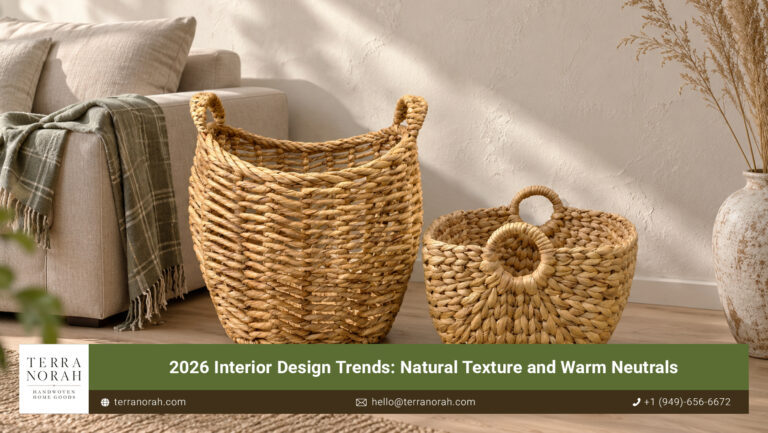
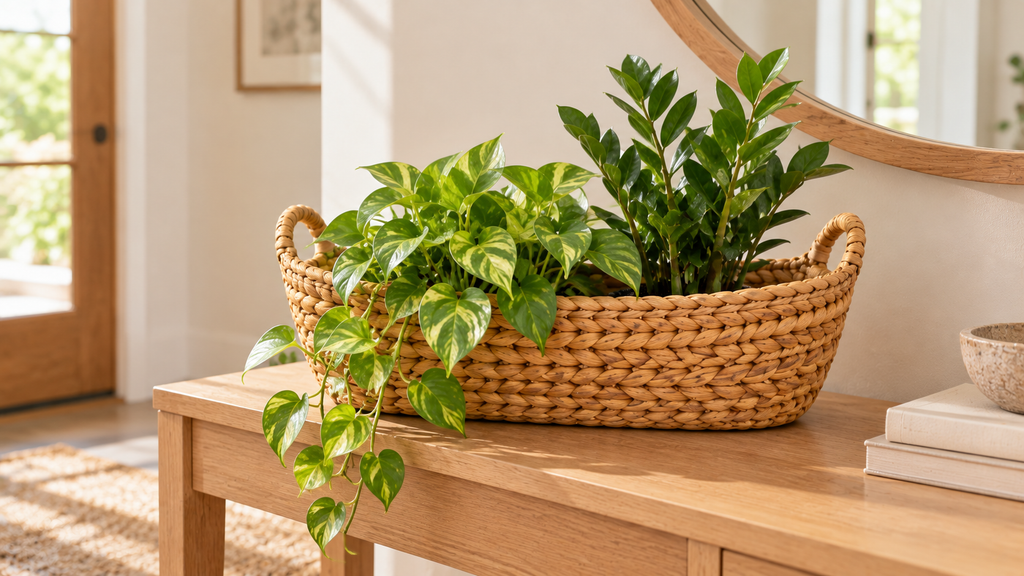
One example is the Boat-Shaped Water Hyacinth Basket. At about 14.5 inches across and 7.5 inches tall, it suits a single medium plant set on the floor beside a sofa or in an empty corner. Because the basket is wide and fairly low, it pairs well with full, bushy plants such as a ZZ plant, whose leaves cover the pot rim. The chunky braided weave keeps the nursery pot out of sight, and the round twisted side handles help when you move the plant. As with any woven basket, use it with a waterproof saucer or inner pot.
You can browse the full range of handwoven baskets on the Terra Norah homepage.
A houseplant is something you look after, and the container around it can be part of that care. A water hyacinth plant basket asks for one small adjustment, keeping water on the pot side of the barrier, and gives back a softer, more natural look than a row of plastic pots.
Start with one plant you already own. Measure the pot, set up the saucer, and see how it changes the corner it sits in.