
Plastic storage bins are everywhere for a reason. They’re cheap, stackable and easy to find. But many of them crack after a few winters in the garage, warp in a hot attic, or end up looking tired long before they’re actually worn out. And when they break, most can’t go back into the recycling bin with your water bottles.
That’s why more people are searching for eco friendly storage that keeps a home organized without adding more plastic to it. The good news: you don’t need to throw out every bin you own or spend a fortune. You just need to know which materials work for which jobs.
This guide walks through the real alternatives, what each one is good at, where each one falls short, and how to choose the right one for every room in your home.
What makes storage truly eco-friendly?
“Eco-friendly” gets printed on a lot of packaging. Before you buy, it helps to check a storage piece against five simple questions.
- Is the material renewable? Plants that regrow quickly, like water hyacinth, seagrass, jute and bamboo, put less strain on resources than petroleum-based plastic.
- How long will it last? A sturdy basket you keep using for years is a better choice than a “green” bin you have to replace often. How long something lasts matters as much as what it’s made of.
- What happens at the end of its life? Untreated natural fibers and wood can break down or be composted. Metal and glass can be recycled almost endlessly.
- How was it made? Handwoven and handcrafted pieces typically use little energy in production and support skilled artisans rather than factory lines.
- Will you actually keep it? Storage you like looking at stays out on display and in use. Storage you don’t like gets swapped out, which is its own kind of waste.
No material scores perfectly on every point. The goal is choosing the best fit for each job, not chasing a perfect product.
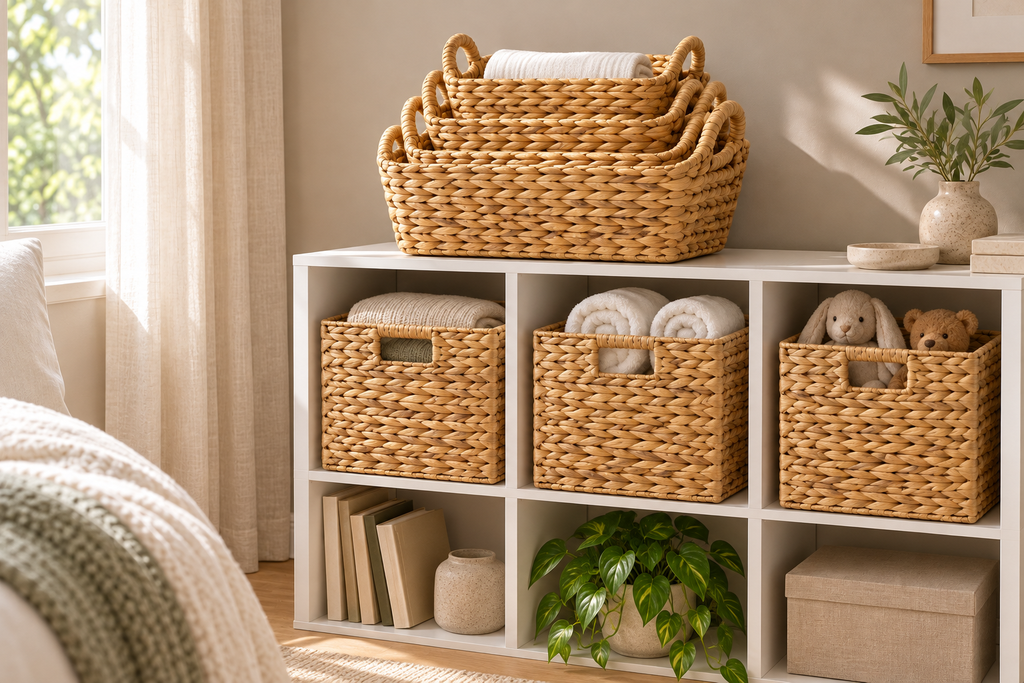
8 eco-friendly alternatives to plastic storage bins
1. Water hyacinth baskets
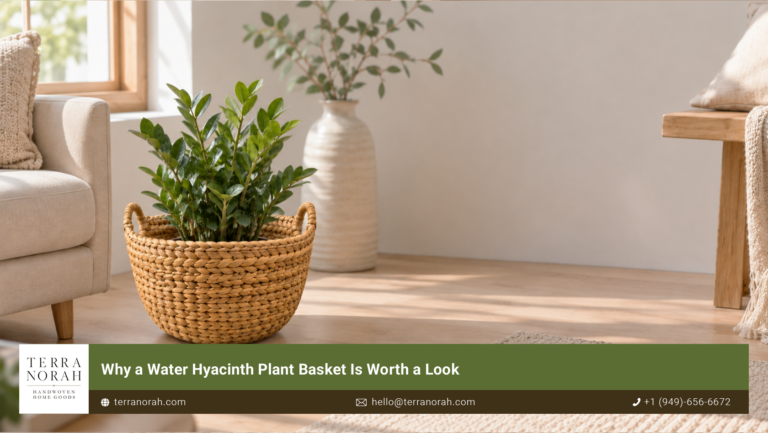
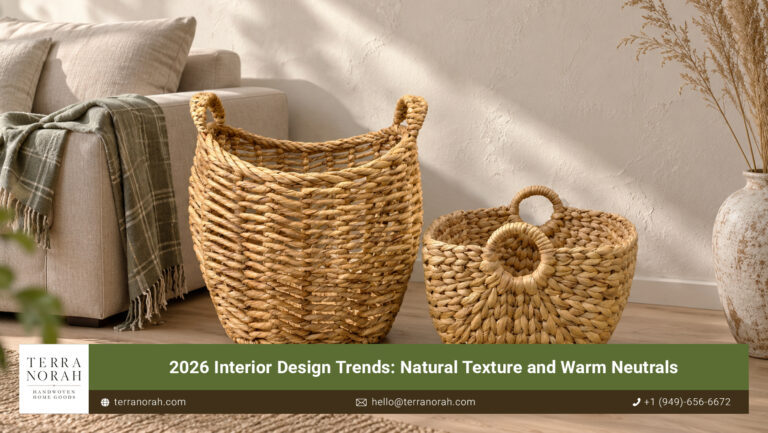
Water hyacinth is a fast-growing aquatic plant that spreads across rivers and lakes in Southeast Asia, often clogging waterways and blocking boats. Harvesting it helps clear those waters. The stems are then sun-dried and hand-braided into thick, sturdy baskets.
Best for: storing folded blankets and throws, kids’ toys, laundry, and everyday living room items.
Watch out for: constant moisture. Keep them out of damp basements and away from shower spray.
2. Seagrass baskets
Seagrass has a smooth, slightly glossy surface that is easy to wipe clean. It also holds its shape well.
Best for: holding pantry staples, rolled bathroom towels, and shoes by the entryway.
Watch out for: a grassy scent when new. It fades after a few days of airing out.
3. Rattan and wicker
Rattan is a climbing palm, and wicker is the weaving technique often used with it. Together they create lighter, more open baskets with a classic look.
Best for: organizing open shelves and storing lightweight items you want to keep in view.
Watch out for: open weaves let small items slip through, so line them with fabric if needed.
4. Jute and cotton rope baskets
Soft-sided and flexible, these collapse flat when you don’t need them. Some cotton baskets are machine-washable, so check the care label.
Best for: storing soft items in nurseries, kids’ rooms, and closets, where a basket without hard edges is a safer choice.
Watch out for: they don’t stack and won’t hold heavy loads.
5. Bamboo boxes and drawer organizers
Bamboo is one of the fastest-growing plants on earth and becomes hard and smooth once processed. It’s a great swap for plastic drawer dividers.
Best for: organizing utensils in kitchen drawers, supplies on desks, and toiletries on bathroom vanities.
Watch out for: glues and finishes. Look for products that list low-VOC or food-safe finishes.
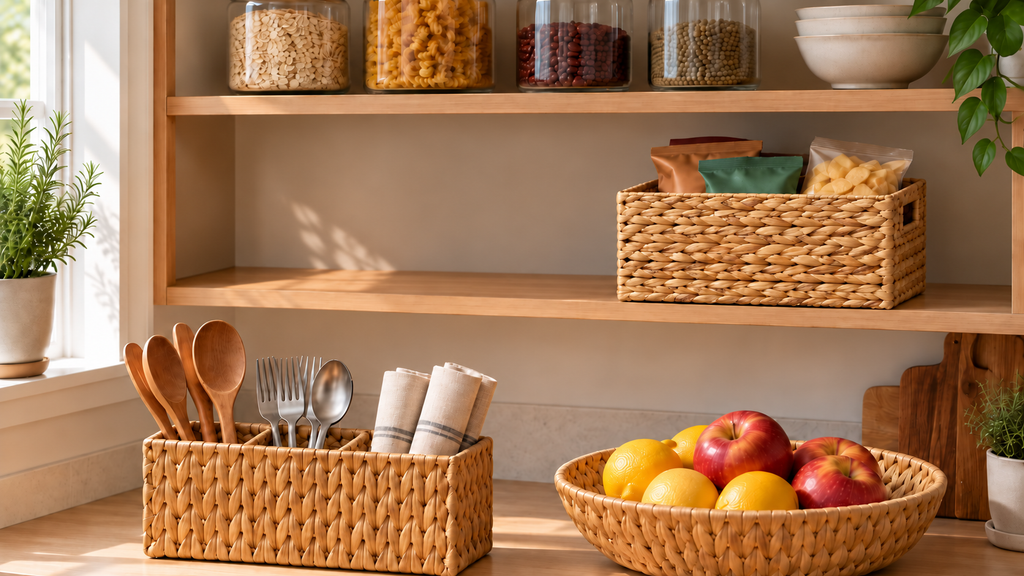
6. Wooden crates and boxes
Solid wood, especially reclaimed or FSC-certified wood, makes durable, stackable storage that holds up well with basic care.
Best for: storing books, records, tools, and produce in garages and pantries.
Watch out for: weight. Wood crates are heavy, so they’re less ideal for high shelves.
7. Metal bins and wire baskets
Galvanized steel and powder-coated wire are not plant-based, but they’re very durable and steel is widely recyclable.
Best for: storing tools, outdoor gear, and pet supplies in garages and workshops.
Watch out for: rust on uncoated metal in humid spaces.
8. Glass jars and canisters
For food, nothing beats glass. It doesn’t absorb odors or stains and you can see exactly what’s inside.
Best for: storing pantry dry goods, cotton swabs, and small craft supplies.
Watch out for: breakage. Keep glass on lower, stable shelves, especially in homes with kids.
Choosing eco friendly storage room by room
The smartest approach is to match each material to the conditions of the room, not to pick one material for the whole house.
| Room | Best materials | Avoid |
| Living room | Water hyacinth, seagrass, rattan | Clear plastic tubs on display |
| Bedroom and closet | Water hyacinth, cotton rope, wooden boxes | Airtight plastic for natural fabrics like wool |
| Kids’ room and nursery | Cotton rope, water hyacinth with no sharp edges | Heavy lids that can slam on fingers |
| Kitchen and pantry | Glass jars, bamboo organizers, seagrass baskets for produce | Natural fiber baskets near the sink |
| Bathroom | Seagrass, bamboo, glass | Any natural fiber in direct shower spray |
| Garage and basement | Metal bins, wooden crates | Woven baskets in damp, unventilated spaces |
A practical tip: you don’t need to replace everything at once. Start with the rooms people actually see, like the living room and entryway. Keep your existing plastic bins for the garage or basement until they wear out, then replace them with metal or wood. Using what you already own is part of sustainable living too.
How to make natural storage last for years
Natural fiber baskets reward a little care. These habits keep them looking good and working well for a long time.
- Dust regularly. A soft brush or the brush attachment on your vacuum gets into the weave without snagging it.
- Spot clean, don’t soak. Use a damp cloth with mild soap, then let the basket air dry completely before refilling it.
- Give them airflow. Leave a little space between baskets and walls, especially in humid climates. Good airflow is the best defense against mildew.
- Keep them out of harsh sun. Long hours of direct sunlight can fade and dry out natural fibers.
- Don’t overload. Use sturdy, thick-weave baskets like water hyacinth for heavy items and lighter weaves for light ones.
Frequently asked questions
What is the most eco friendly storage material?
There’s no single winner. Fast-renewing plant fibers like water hyacinth, seagrass and bamboo are great for everyday home storage. Metal and glass are better for garages and pantries because they last decades and recycle well.
Are natural fiber baskets strong enough to replace plastic bins?
For most household items, yes. Thick, tightly woven baskets such as water hyacinth easily hold blankets, toys, books and laundry. They aren’t the right choice for heavy tools or wet storage.
Can I use woven baskets in a bathroom?
Yes, as long as they’re not in direct contact with water. Place them on shelves or under the sink, and choose seagrass, which handles humidity better than most natural fibers.
Are eco-friendly storage baskets more expensive than plastic?
The upfront price is often higher. But a well-made basket can outlast several plastic bins and doubles as decor, so the cost per year of use is usually comparable or lower.
What should I do with my old plastic bins?
Keep using them where they work best, like the garage or for seasonal storage. When they break, check your local recycling rules, since many bins use plastics that curbside programs don’t accept.
Switching to eco friendly storage isn’t about perfection. It’s about choosing materials that last longer, come from renewable sources, and fit the way you actually live. Start with one room, pick the right material for its conditions, and let the change happen gradually.
If you’re starting with the living room or bedroom, a couple of sturdy woven baskets can replace a stack of plastic bins and make the space feel warmer at the same time. At Terra Norah, our water hyacinth baskets are handwoven by artisans in Vietnam using plants harvested from local waterways. Browse the Terra Norah collection when you’re ready to make the switch.