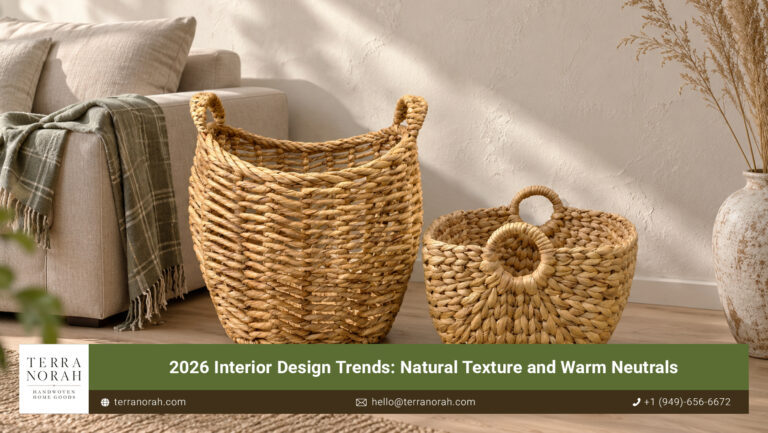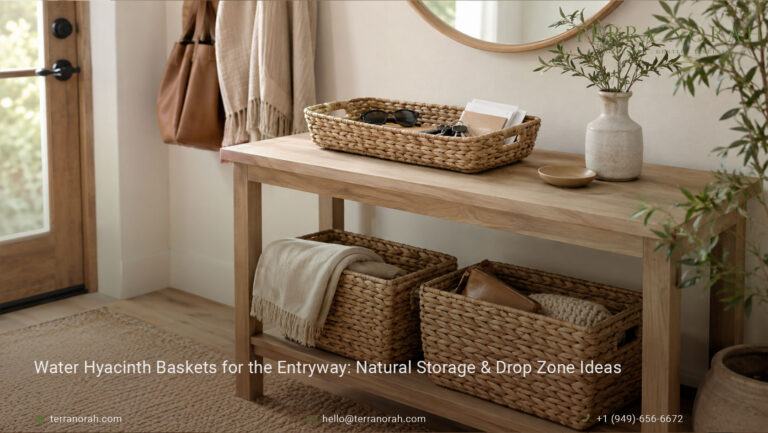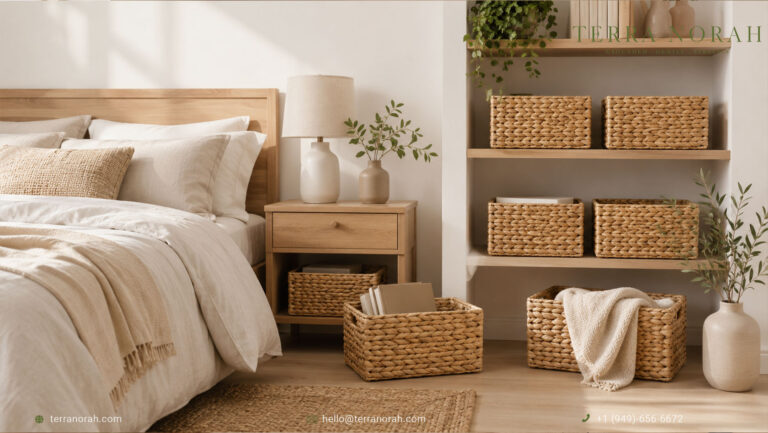


Basket weaving patterns give each basket its distinctive texture, from simple checkerboard crossings to diagonal lines and open geometric shapes. These details influence how a basket looks, but they also help you decide what to store inside it.
A closely woven basket can keep smaller belongings contained. An open weave can make a large storage basket feel lighter and let you see its contents. Meanwhile, a spiral construction brings a different texture to a decorative bowl or tabletop basket.
This guide explains common basket weaving techniques, how to recognize them, and what to consider when choosing a woven basket for your home.
What Are Basket Weaving Patterns?
Basket weaving patterns are the arrangements created as strands, strips, or other elements cross, twist, wrap, or join together.
To understand a basket, it helps to distinguish three features:
- Technique: How the basket is constructed, such as plaiting, twining, or coiling.
- Pattern: The visible arrangement, such as checks, diagonals, or geometric openings.
- Material: What the basket is made from, such as bamboo, willow, rattan, or water hyacinth.
For example, a checker pattern describes the arrangement of the crossings. Water hyacinth describes the material. A basket can also combine techniques, using one construction for its base and another for its sides.
Understanding these differences makes it easier to compare woven storage baskets beyond their color and shape.
Common Basket Weaving Patterns and Techniques
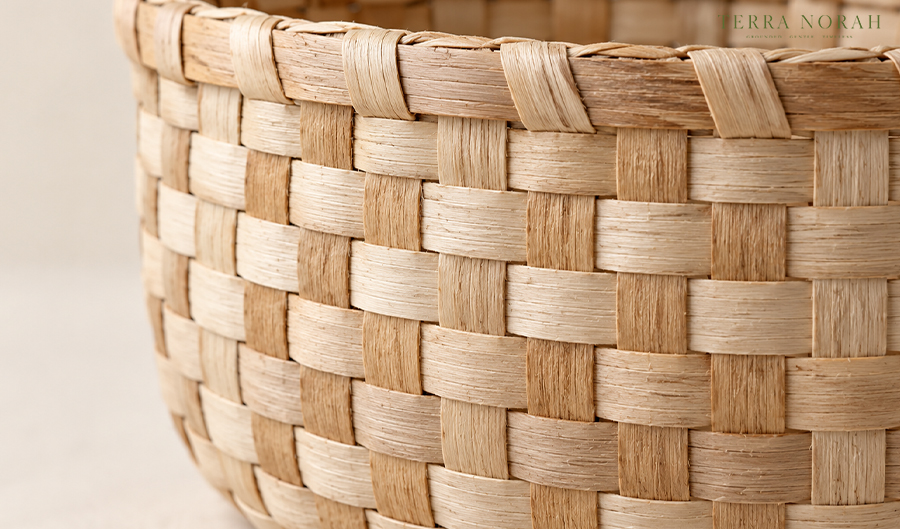
1. Checker Weave: A Simple, Regular Grid
Checker weave is one of the easiest basket patterns to recognize. Each strip passes over one crossing element and under the next, creating an alternating grid. It is a familiar form of plaited basketry.
The result has a calm, orderly appearance. Wide strips make the checks more noticeable, while narrow strips create a finer texture.
For home storage, look at the spaces between the strips. A closely packed checker weave is a practical option for accessories and other small belongings. A more open version may suit larger items.
Consider it for: Shelf baskets, everyday organizers, and interiors where you want a simple woven texture.
2. Twill Weave: Diagonal Lines and Decorative Movement
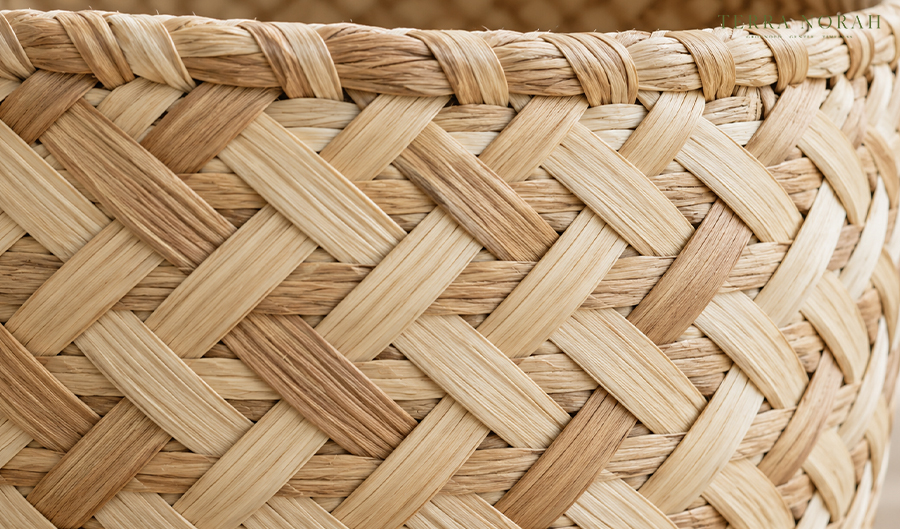
In a twill weave, an element passes over or under more than one crossing element. Offsetting these crossings creates diagonal lines. Variations can produce more complex geometric designs.
The “twilled twos” example in the reference image shows a repeated over-two, under-two arrangement. Its diagonal movement gives the surface a different rhythm from checker weave.
A twill weave basket can work well when the basket itself will be on display. Choose a subtle, natural color if you want the pattern to add interest without dominating the room.
Consider it for: Visible storage, decorative baskets, and spaces that need a little more surface detail.
3. Hexagonal Weave: An Open Geometric Structure
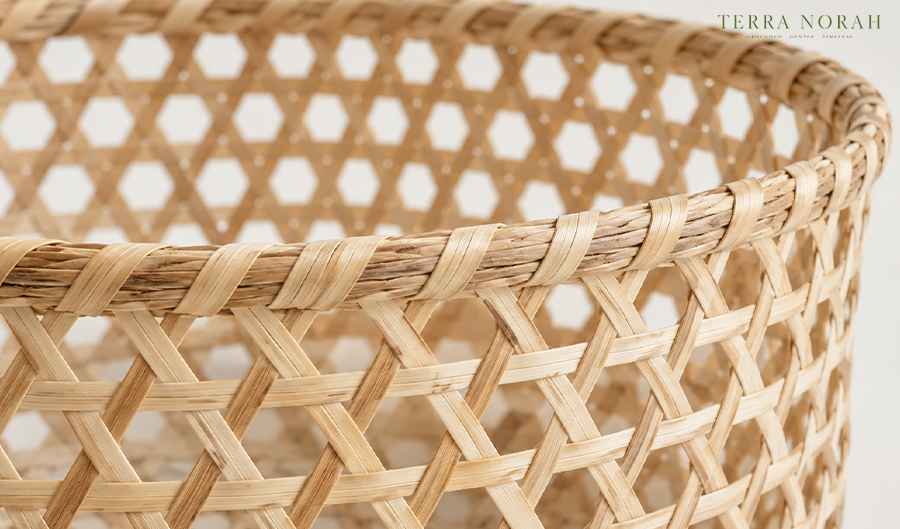
Hexagonal basket weave uses crossing elements arranged to form a repeating six-sided structure. Open hexagonal plaiting is a recognized basket-making technique that can be developed from a flat woven base into a three-dimensional basket.
Its openings give the basket an airy appearance and make the contents more visible.
For storage, compare the opening size with the objects you plan to keep inside. Blankets and other bulky items may be easier to contain than loose accessories.
Consider it for: Decorative storage, larger household items, and displays where an open texture suits the room.
4. Twining: Strands That Twist Around Upright Supports
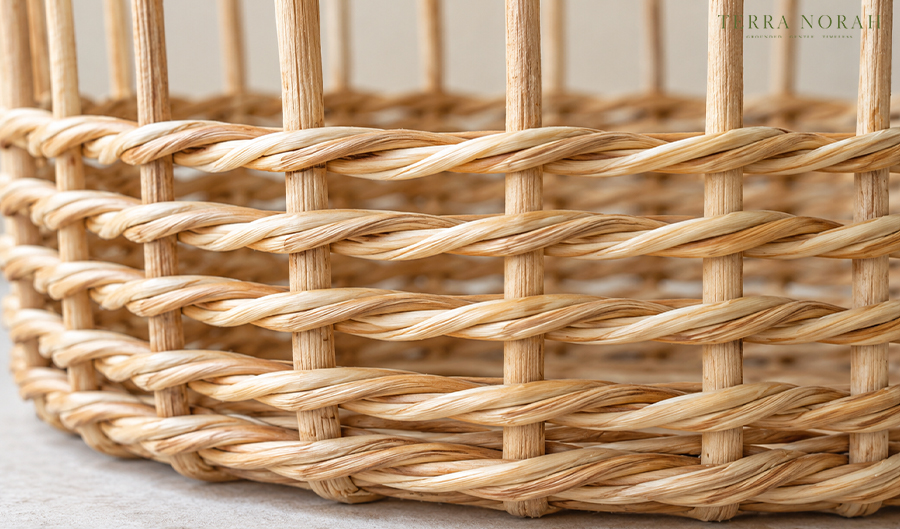
Twining uses two or more active weaving elements that cross around stationary supports. The twists form part of the basket’s structure and create a distinctive surface texture.
Twined baskets can be woven closely or with more space between the rows. Therefore, “twined” does not automatically mean tightly closed. The spacing changes both the appearance and the construction.
Look closely at the junctions when identifying this technique. The working strands twist around the supports rather than simply forming an over-and-under grid.
Consider it for: Baskets with a visible twisted texture, whether you prefer closely woven storage or a more open design.
5. Coiling: A Spiral Built from Joined Rows
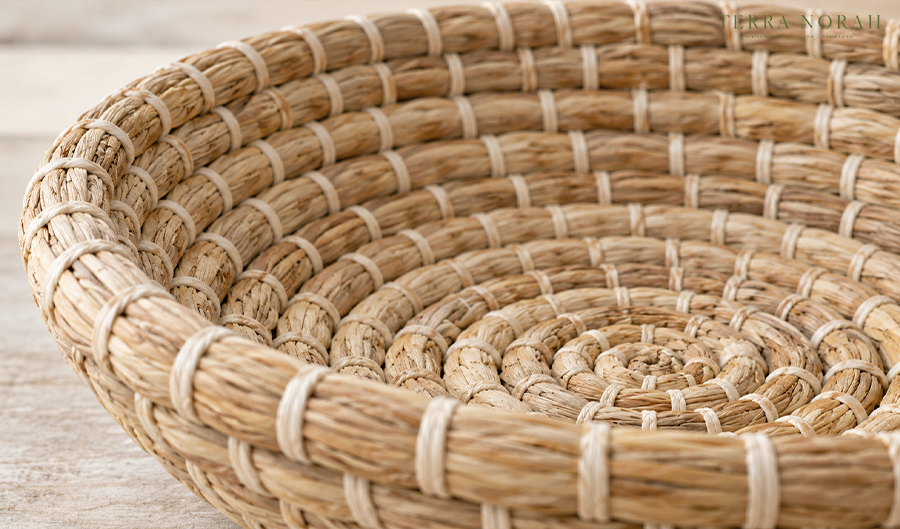
Coiling builds a basket from a foundation that curves around itself. Stitches or binding elements join each new section to the previous row, forming the base and sides.
The reference image includes sewn coiling and sewn-braid coiling. These examples show how joined rows can create a basket without a checkerboard structure.
Coiled baskets often draw attention to their circular movement. The thickness of the foundation and the spacing of the stitches affect the finished texture.
Consider it for: Decorative bowls, tabletop baskets, and pieces where a spiral surface complements the shape.
6. Wrapped and Combined Structures
The reference image also shows wrapped elements and latticework that combines twining and wrapping. These details illustrate how basket makers can use different ways of securing intersections.
When choosing a basket with a combined structure, examine each part separately. The base, sidewalls, rim, and handles may use different arrangements.
A decorative sidewall can look open and delicate while the base is closely constructed. Likewise, a braided handle may be an added feature rather than the technique used throughout the basket.
Consider it for: Baskets with contrasting textures, distinctive borders, or visible construction details.
Basket Weaving Patterns at a Glance
The following table offers practical shopping guidance. Suitability still depends on the basket’s dimensions, material, spacing, and overall construction.
| Pattern or technique | What to look for | Practical consideration |
|---|---|---|
| Checker weave | Alternating over-one, under-one crossings | Check the gaps before storing small objects |
| Twill weave | Offset crossings that create diagonal lines | Useful when you want visible pattern detail |
| Hexagonal weave | Repeating six-sided openings | Match the openings to the size of the contents |
| Twining | Working strands twisting around supports | Inspect how closely the rows are spaced |
| Coiling | A continuous foundation joined in curved rows | Check the base, stitching, and intended use |
| Combined structures | Different techniques across the basket | Examine the base, sides, rim, and handles separately |
Open Weave vs. Tight Weave: Which Should You Choose?
Open and tight describe the spacing of the construction. They are useful shopping terms, but they are not individual basket weaving techniques.
Choose an Open Weave for Visibility
Open weave baskets let you see more of what is inside. They can also give a large basket a lighter visual presence beside a sofa or beneath a console table.
They are worth considering for bulky items such as throws or larger soft toys. However, check that the openings will contain everything you plan to store.
Choose a Close Weave for Smaller Items
Closely woven baskets offer more continuous coverage around the contents. They are often a convenient choice for loose accessories, toiletries, or smaller household objects.
Check the base as well as the sides. A basket with closely woven walls may still have gaps underneath.
For either option, use the actual construction as your guide. A pattern name alone cannot tell you how much weight a basket can carry.
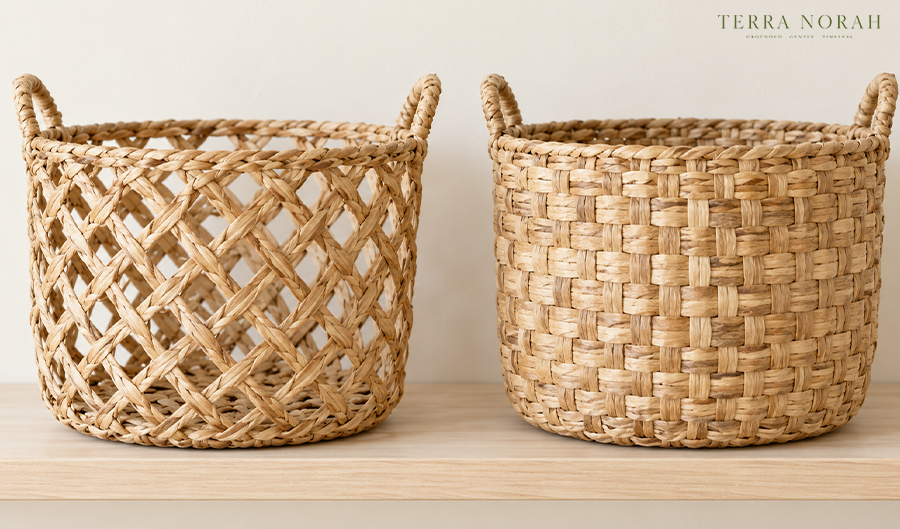
You like model your shop Terra Norah : Open Weave Water Hyacinth Storage Basket
How to Choose Basket Weaving Patterns for Your Home
Start with What You Need to Store
Before choosing a decorative pattern, list the items the basket will hold.
For small belongings, look for narrow gaps and a stable base. For blankets, prioritize capacity and an opening that makes them easy to reach. For a serving tray, check the base, rim, and handle attachments.
This approach helps you choose a basket that works well in daily use.
Measure the Available Space
Measure the shelf, corner, or tabletop before buying.
Check the basket’s widest point, including handles, and compare its height with the available clearance. For round baskets, confirm the diameter rather than relying on a photo.
If you need several baskets, compare their proportions together. A matching weave can look quite different across a shallow tray and a tall storage basket.
Match the Texture to the Room
Use the weave to support the room’s existing details.
A regular checker pattern can complement simple furniture. Diagonal twill adds movement. An open geometric weave can echo other airy textures, while a pronounced spiral can make a tabletop basket a focal point.
If your room already has patterned rugs or cushions, a quieter woven surface may be easier to combine with them.
Inspect the Whole Basket
Look beyond the sidewall pattern:
- Does the base sit evenly?
- Are the strand ends neatly finished?
- Does the rim feel secure?
- Are the handles firmly attached?
- Does the manufacturer specify an intended use or load limit?
Small variations can be part of handmade work. Loose attachments or broken strands deserve closer attention.
Understanding Water Hyacinth Basket Weave
Water hyacinth is a basket material, not one specific weaving pattern.
When comparing water hyacinth baskets, look at how the strands are prepared and arranged. Thick strands can create a pronounced texture, while different crossings and spacing change the surface appearance.
To assess a water hyacinth basket weave, check:
- The size of the openings.
- The density of the base.
- The finish around the rim.
- Any additional materials or supporting frame.
- The construction of the handles.
Do not assume that every water hyacinth basket uses the same technique. Product close-ups are more useful than the material name alone when comparing woven basket patterns.
Choosing a Woven Basket for Each Room
Living Room
For blankets and throws, start with a generous opening and enough depth. Then choose a texture you enjoy seeing beside the sofa.
An open weave can reveal folded textiles, while a close weave gives the contents more coverage.
Kitchen and Dining Area
For trays and table organizers, prioritize a stable base and dimensions suited to the objects you will place inside.
Inspect the handle attachments if you plan to carry the basket. Follow the product’s instructions for food contact and cleaning.
Bedroom and Closet
Closely woven shelf baskets can help contain smaller accessories. Measure the shelf carefully, particularly when handles extend above the rim.
Repeating the same woven texture across several baskets can make open shelving feel more orderly.
Bathroom
Choose a basket intended for the environment where it will be used. Keep natural-fiber baskets away from standing water and avoid storing wet textiles inside them.
Basketry materials can be damaged by moisture, and damp conditions can encourage mold growth.
Plant Displays
Choose the basket’s shape and texture to complement the plant, then check that a separate pot and protective container will fit inside.
Treat the woven basket as the decorative outer layer unless the product is specifically designed for direct planting.
Common Mistakes When Choosing a Basket Weave
Choosing by Appearance Alone
A beautiful pattern may still have openings too large for your belongings. Always compare the weave with the intended contents.
Confusing Material with Technique
Terms such as water hyacinth, bamboo, and rattan identify materials. Checker, twill, twining, and coiling describe arrangements or construction methods.
Assuming a Dense Weave Guarantees Strength
Density is only one feature. Materials, supporting structures, stitching, handles, and condition also matter.
Missing the Details in Product Photos
Look for close-ups of the base, rim, and handles. A front-facing photo may not show the parts that matter most for everyday use.
Find a Woven Texture That Works for You
The right basket weaving patterns combine a texture you enjoy with a construction suited to your belongings.
Start with the purpose, check the spacing and dimensions, and then choose the pattern that fits your room. Whether you prefer a simple checker surface, diagonal twill, or an open geometric design, those details can make everyday storage more satisfying to use.
Explore Terranorah’s woven baskets and trays to find natural textures for your storage and tabletop arrangements. Compare each product’s close-up photos, dimensions, and care instructions before choosing your piece.
Frequently Asked Questions
What are the main basket weaving techniques?
Common techniques include plaiting, twining, and coiling. Basketry also includes other construction methods, and a single basket may combine several techniques.
What is the difference between checker weave and twill weave?
Checker weave alternates over one element and under the next. Twill passes over or under multiple elements, with offset crossings that can create diagonal patterns.
Is an open weave basket suitable for storage?
Yes, provided the openings are small enough to contain the intended items. Check the base and sides, particularly when storing loose accessories.
Which basket weaving pattern is strongest?
There is no single pattern that guarantees the strongest basket. Assess the materials, construction, condition, and intended load as well as the visible weave.
Are all diagonal basket patterns twill?
No. Diagonal plaiting and twill are related terms but describe different aspects of the arrangement. A diagonal appearance alone may not be enough to identify the precise construction.
Is a braided handle a basket weaving pattern?
A braided handle is a construction detail. It does not necessarily identify the technique used for the basket’s base or sides.
What should I check when buying a basket online?
Check the dimensions, opening size, base, rim, handle attachments, materials, and care instructions. Close-up photos help you assess details that a full product image may hide.