

Mold is the single most common problem people have with natural fiber baskets, and it is almost entirely preventable. A woven basket does not develop mold because the material is weak. It develops mold because it was put somewhere it could not dry, and no natural fiber survives that for long.
This guide explains how to prevent mold on woven baskets in the first place, why it happens, which rooms carry the most risk, what to do if it has already appeared, and how to tell when a basket is past saving. Prevention takes far less effort than removal, so most of this is about getting the conditions right.
Why woven baskets get moldy
Mold needs three things: moisture, organic material, and still air. A woven basket in the wrong spot supplies all three at once.
The organic material is unavoidable. Water hyacinth, seagrass, rattan, and jute are all dried plant fibers, which is exactly what makes them beautiful and biodegradable. You cannot change that, and you would not want to.
What you can control is the other two. Moisture and stagnant air are the actual causes, and almost every moldy basket traces back to one of five situations:
- Something damp was put inside, like a wet towel, damp shoes, or just-washed produce
- The basket sat directly on a wet or cold floor where condensation formed underneath
- It lived in a humid room with no ventilation, most often a bathroom without a window or fan
- It was pressed against a wall or in a corner where air could not circulate around it
- It was stored away, often seasonally, before it was completely dry
Notice that none of these is about the fiber failing. They are all about conditions, which is good news, because conditions are easy to change.
The humidity threshold that matters
Mold generally needs sustained humidity above roughly 60 percent to take hold. Most homes sit comfortably below that, which is why baskets in a living room or bedroom almost never have problems.
The trouble spots are predictable: bathrooms after a shower, laundry rooms, basements, unheated storage, and kitchens with poor extraction. In these rooms humidity spikes regularly, and if the air does not move, moisture settles into whatever absorbs it.
The practical takeaway is not to buy a hygrometer. It is simpler than that: if a room feels damp or takes a long time to dry out after use, treat it as high risk and apply the habits below.
Prevention, room by room
Bathroom
The highest risk room, and the one where woven baskets are most popular. Both things can be true, you just need a few rules.
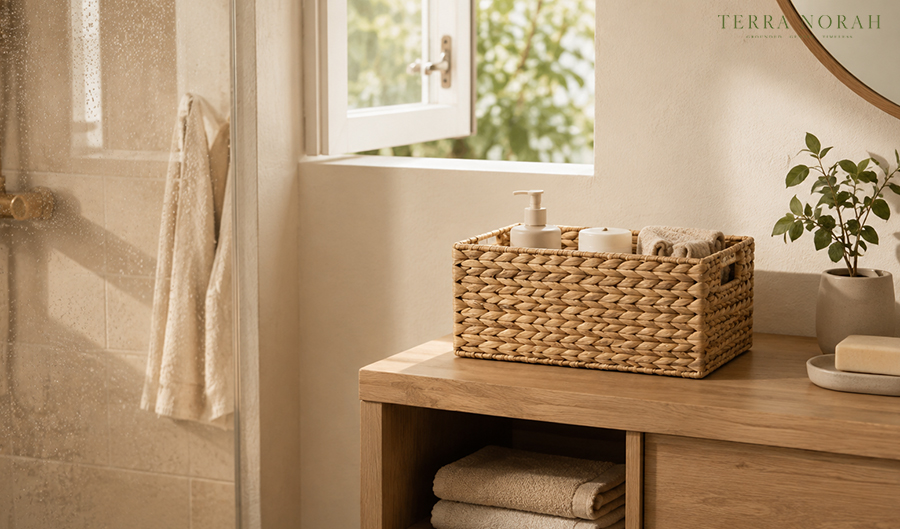
Keep baskets out of the splash zone entirely. Not on the tub edge, not beside the shower, not where the sink sprays. A vanity, a shelf, or a spot near the door is fine.
Ventilate after every shower. Run the fan for fifteen minutes afterwards or leave a window cracked. This one habit does more than anything else, and it protects your walls and grout too.
Let towels dry before they go in. A basket of damp towels is the classic cause. Hang them first, basket them after.
If your bathroom has no window and no fan, be honest about it. Use the basket for dry items only, like spare rolls or unopened toiletries, and keep it out of the room during long showers if you can.
Kitchen and pantry
Lower risk, but two specifics matter. Keep baskets away from the sink and the kettle, where splash and steam land. And never put wet produce straight in. Wash, dry, then store. Damp vegetables at the bottom of a basket create a small humid pocket that stays wet for days.
Laundry room and basement
These are the rooms where seasonal storage goes wrong. If you keep baskets here, get them off the floor, on a shelf or a low rack, so air can move underneath. Concrete floors hold cold and draw condensation, and a basket sitting flat on one has no chance to dry.
Bedroom, living room, and entryway
Genuinely low risk. The only real watch point is the entryway, where wet shoes and dripping umbrellas turn a dry space damp. Let shoes dry on a mat first, and keep the basket away from where the coats drip.
Five habits that prevent almost every case
If you remember nothing else:
Never store anything damp. Wet towels, damp shoes, washed produce, anything that has not dried. This causes more mold than every other factor combined.
Give baskets breathing room. A few centimetres from the wall, not wedged into a corner, not stacked tightly. Air needs a path around all sides, including underneath.
Rotate and reposition occasionally. Turn baskets every few weeks so the same side is not always facing the wall. Takes ten seconds.
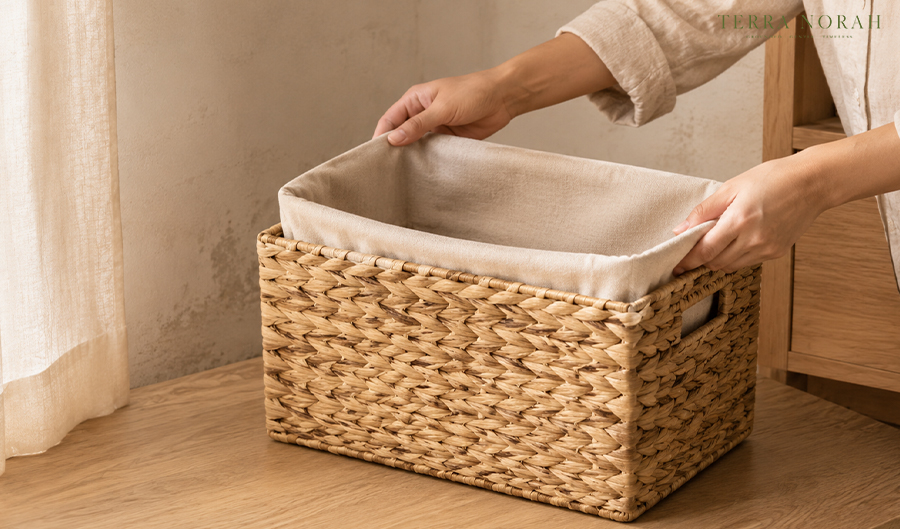
Use a liner for anything risky. A cloth liner absorbs the moisture and can go in the wash. The weave stays dry. This is the easiest win available and most people skip it.
Dry completely before storing away. Seasonal storage is where good baskets die. Before a basket goes into a cupboard, attic, or basement for months, make sure it is bone dry, then store it somewhere ventilated rather than sealed in plastic.
That last point deserves emphasis. Never store a natural fiber basket in a sealed plastic bag or airtight box. Whatever moisture is in the fiber has nowhere to go, and you will open it months later to a mold problem. A breathable cotton bag or nothing at all is far better.
How to remove mold once it appears
If you have caught it, act quickly. Surface mold is easy. Mold that has been sitting for months is a different matter.
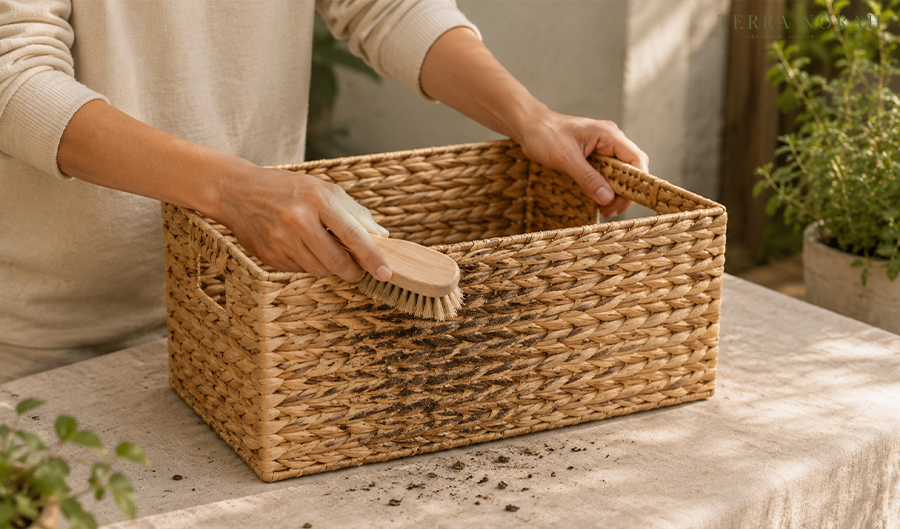
Work outdoors. Brushing mold indoors sends spores around the room. Take the basket outside, or into a garage with the door open.
Brush off the surface growth with a dry brush, working with the weave rather than against it. Wear a mask if you are sensitive to spores. Most visible growth comes off at this stage.
Wipe with diluted white vinegar. Equal parts vinegar and water, on a cloth wrung out until it does not drip. Vinegar kills mold without the discoloration bleach causes on natural fiber. Cover the affected areas and a little beyond, since spores spread further than the visible patch.
Dry it fast and thoroughly. Moving air, room temperature, turned occasionally so every side dries including the base. Outdoors in shade with a breeze is ideal. Avoid direct sun and direct heat, which make fibers brittle. Do not put it back into use until it is completely dry to the touch.
Then change the conditions. This is the step people skip and it is the only one that prevents a repeat. If you clean the mold and put the basket back exactly where it was, it will return. Move it, improve ventilation, or change what you store in it.
When a basket cannot be saved
Sometimes the honest answer is to let it go. Signs that mold has gone too deep:
The fiber feels soft, spongy, or brittle rather than firm. Structural damage means the mold has been feeding on the material itself, not just growing on the surface.
Dark staining that does not lift after cleaning and drying, especially through the thickness of the braid rather than on the surface.
A musty smell that returns within days of a thorough clean and dry, which usually means growth deep inside the weave where you cannot reach.
Visible growth on the inside of the braid, not just the outer surface.
This is uncommon and nearly always follows months of damp storage rather than everyday use. If a basket reaches this state, it is better replaced than kept, particularly if anyone in the household is sensitive to mold.
Does this apply to all natural fibers?
Broadly, yes. Water hyacinth, seagrass, rattan, jute, and wicker are all plant fibers and all follow the same rules. Denser weaves can hold moisture slightly longer in the core, and thicker braids take longer to dry through, so give chunkier baskets more drying time.
Synthetic woven baskets, made from PE or resin, do not grow mold on the fiber itself, but they can still trap moisture underneath and grow mold on whatever is stored inside. Ventilation still matters.
The short version
Mold on woven baskets is a conditions problem, not a material problem. Keep the contents dry, give the basket airflow, never store it away damp, and use a liner for anything questionable. Do that and you will likely never deal with mold at all.
At Terra Norah, our baskets are handwoven from natural water hyacinth and built for years of everyday use. Look after the conditions and they will look after the rest.
Explore our handwoven [water hyacinth baskets] and bring home storage that lasts.
Frequently Asked Questions
Why did my woven basket get moldy?
Almost always because something damp was stored inside, the basket sat on a wet or cold floor, or it lived in a humid room without airflow. The fiber is not at fault, the conditions are.
How do I get mold out of a wicker or seagrass basket?
Brush off surface growth outdoors, wipe with equal parts white vinegar and water using a well-wrung cloth, then dry fully in moving air. Afterwards, change where or how the basket is stored.
Can I use bleach to kill mold on a basket?
No. Bleach discolors and weakens natural fiber. Diluted white vinegar handles mold effectively without the damage.
Are woven baskets safe to use in a bathroom?
Yes, in a ventilated bathroom, kept out of the splash zone, and used for items that are already dry. In a windowless bathroom with no fan, limit them to dry storage only.
How do I store baskets long term without mold?
Make sure they are completely dry, then store somewhere ventilated. Never seal them in plastic bags or airtight boxes, and keep them off concrete floors.
Can a moldy basket be saved?
Usually yes if caught early and the fiber is still firm. If it feels soft or brittle, has deep staining, or the musty smell returns after cleaning, it is better replaced.