

Learning how to line a woven basket gives you more ways to use a piece you already love. A fabric liner can hold bread crumbs, separate delicate textiles from the weave, or make everyday cleanup easier. For plants and waste, a suitable removable insert serves a different purpose: keeping moisture and mess away from the basket.
The best lining depends on what goes inside. A cotton napkin may be enough for a bread tray, while a fitted liner suits regular storage. Below, you’ll find simple methods, material choices, and practical ways to keep your basket looking inviting.
Why Line a Woven Basket?
A woven basket liner creates a layer between the contents and the basket’s interior. You may find it useful for several reasons:
- Contain small items: A closely woven fabric helps keep tiny accessories from slipping through gaps.
- Separate delicate fabrics: A smooth lining reduces direct contact between clothing and uneven sections of weave.
- Simplify cleaning: You can remove crumbs or wash a removable liner separately.
- Add a decorative finish: A folded linen edge introduces softness and color.
- Adapt the basket’s purpose: Different liners let you use a basket for bread, dry storage, or a potted plant display.
However, lining every basket is unnecessary. A basket holding books or sturdy household items may work well without one.
Also, a fabric liner does not make a woven basket waterproof. Choose moisture protection separately when the intended use requires it.
Choose the Right Woven Basket Liner
Before making a DIY basket liner, decide what you want it to do.
| Basket use | Suitable lining | What to consider |
|---|---|---|
| Bread and rolls | Clean cloth intended for food contact | Wash regularly and avoid fabrics that shed fibers |
| Clothing and dry towels | Washable cotton or linen | Choose a smooth fabric without exposed rough seams |
| Small accessories | Closely woven fabric liner | Check that small items cannot pass through the fabric |
| Dry household waste | Properly fitted waste bag or removable bin | Prevent leaks and remove waste regularly |
| Potted plants | Waterproof outer insert around a separate plant pot | Keep drainage water away from the weave |
For a water hyacinth basket liner, removability is especially useful. It lets you inspect the fibers and dry the basket if moisture gets inside.
What You Need to Line a Basket
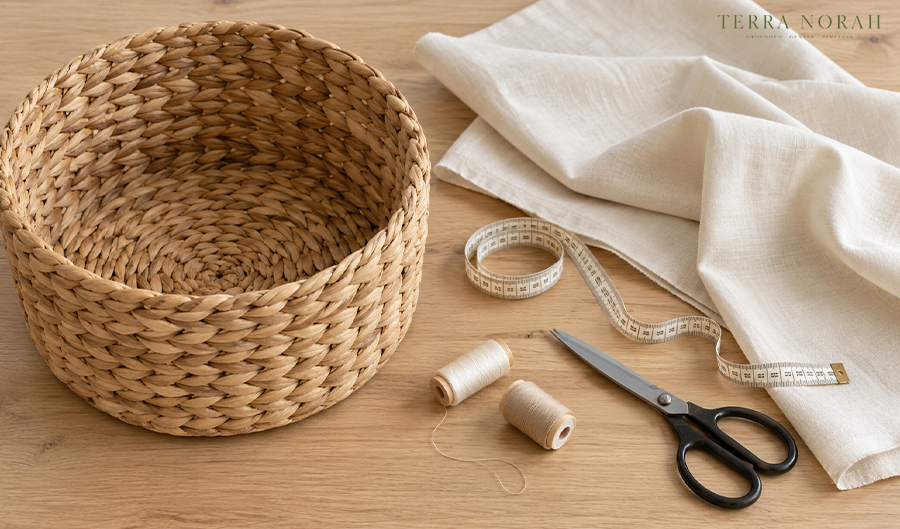
For a simple fabric lining, gather:
- Your clean, dry woven basket
- A measuring tape
- Washable cotton or linen
- Fabric scissors
- A needle and thread or sewing machine, if making a fitted liner
- Pins or clips for assembling the fabric away from the basket
Wash and dry washable fabric before measuring and cutting it, following its care instructions. This helps account for shrinkage before you make the liner.
Avoid attaching the lining with permanent glue. A removable basket liner is easier to clean and replace.
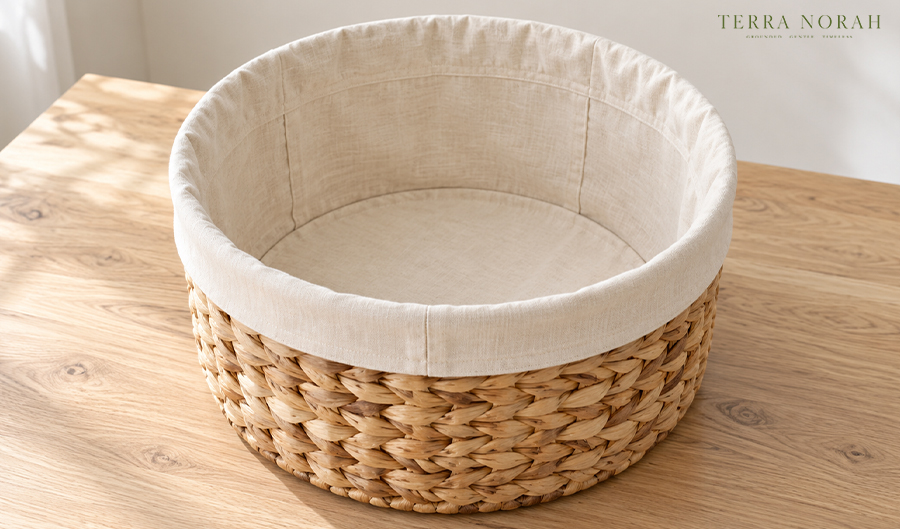
How to Line a Woven Basket Without Sewing
A no-sew basket liner is an easy option for shallow baskets, bread trays, and occasional dry storage.
1. Clean and Dry the Basket
Remove loose dust with a soft brush or dry cloth. Inspect the interior for sharp or damaged sections.
If you spot-clean the basket, allow it to dry completely before covering the interior.
2. Choose a Generous Piece of Fabric
Use a cloth large enough to cover the base, rise up the sides, and fold over the rim.
For a round basket, estimate the fabric span as:
Inside base diameter + twice the inside depth + twice the desired fold-over allowance.
This is a starting estimate for a draped liner. Tapered sides and thick rims may require extra fabric, so test the fit before cutting.
3. Center the Fabric Over the Opening
Place the fabric over the basket and gently press its center onto the base.
Then smooth it toward the sides. Let the extra material form soft folds instead of pulling it tightly.
4. Fold the Edges Over the Rim
Arrange the fabric evenly around the opening. Keep handles and grip areas clear.
For a shallow bread basket, a relaxed napkin lining may be all you need. For deeper storage, test whether the cloth stays in place when you remove items.
5. Check the Fit
Add a few intended contents and lift them out again.
If the fabric shifts too much, try a better-fitting cloth or use a fitted liner for regular use. Keep loose folds from interfering with the contents or handles.
How to Make a Fitted Fabric Basket Liner
A fitted fabric basket liner suits baskets you use frequently. It takes more preparation, but it usually stays in place more neatly than a draped cloth.
1. Trace the Inside Base
Make a paper template of the basket’s interior base. Test it inside the basket and adjust the shape.
Use a circle for a round basket or a rounded rectangle where appropriate. Add a seam allowance before cutting the fabric.
2. Measure the Sides
Measure the inside depth and the circumference at both the base and opening.
For a straight-sided round basket, a rectangular side panel may work. For a tapered or irregular basket, use shaped panels or a pattern made to match the interior. A single rectangle may bunch near a narrower base.
Include allowances for seams and any cuff you want to fold over the rim.
3. Assemble the Liner
Sew the side panel or panels together, then attach them to the base piece.
Keep rough seam edges facing away from the contents where possible. Finish the top edge with a hem or folded cuff.
4. Test Before Finishing
Place the liner inside the basket before completing the final hem.
Check that it reaches the bottom without stretching and folds neatly around the rim. Adjust the fit if it blocks the handles or pulls against the weave.
Keep the finished liner removable for washing.
How to Line a Woven Basket for Different Uses
Bread and Kitchen Serving
A clean, food-contact cloth makes a useful bread basket liner. It catches crumbs and adds a soft backdrop for rolls or a loaf.
Place oily, wet, or heavily topped foods on a plate rather than directly against the fabric. Remove crumbs after serving and wash the cloth as needed.
For a relaxed breakfast table, try a neutral liner inside Terra Norah’s round water hyacinth trays without handles.
Clothing, Towels, and Accessories
Choose a washable lining with a smooth finish for dry textiles.
A cotton basket liner works well for grouping scarves, hand towels, or small accessories. Use closely woven fabric for items that could otherwise catch in or pass through the basket’s weave.
Always dry towels and clothing before storing them. A liner does not make damp laundry suitable for natural woven storage.
A Woven Waste Basket
For dry household waste, use a suitable waste bag or removable inner bin instead of a decorative fabric liner.
Check the fit at the opening and base. Keep the liner from slipping down, and inspect it for leaks when emptying the basket.
Terra Norah’s round water hyacinth waste basket can be styled in a dry bathroom corner, bedroom, or home office with an appropriately sized removable liner.
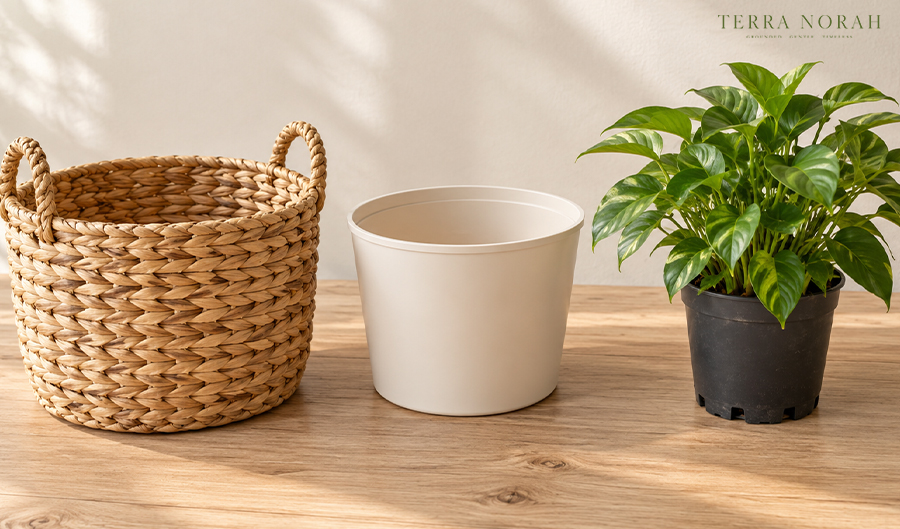
A Basket Used as a Plant Pot Cover
A basket liner for plants needs a different setup from a fabric storage liner.
Keep the plant in a separate pot with drainage holes. Place that pot inside a waterproof outer insert or on a suitable watertight saucer within the basket.
Remove the plant for watering, allow excess water to drain, and empty collected water before returning it. Do not fill an indoor decorative woven basket directly with wet soil.
Good drainage remains essential for the plant, even when the basket is only a decorative cover.
Mistakes to Avoid When Lining a Basket
A few small choices can make your lining easier to use:
- Choosing the wrong material: Match the liner to storage, food serving, waste, or plant display.
- Cutting before testing: Check the draped fit or paper pattern first.
- Treating fabric as waterproof: Use a suitable insert where leak protection is needed.
- Leaving damp material inside: Remove wet liners and dry the basket fully.
- Covering the handles: Leave enough clearance to grip the basket comfortably.
- Gluing the liner permanently: Keep it removable whenever possible.
- Ignoring the basket’s capacity: A liner does not increase the strength of the weave or handles.
How to Care for a Lined Woven Basket
Remove the liner regularly to check underneath it. Dust the basket and wash the fabric according to its care label.
Let both pieces dry completely before putting them back together. If spills reach the weave, remove the lining promptly and follow the basket manufacturer’s cleaning instructions.
For natural woven baskets, keep the storage area dry and avoid prolonged dampness. Check plant inserts and waste liners more often because they can conceal leaks.
Find a Basket That Fits Your Routine
Knowing how to line a woven basket helps you choose a lining that supports its everyday purpose. A simple cloth suits bread serving, a fitted liner organizes dry belongings, and a removable insert helps separate plants or waste from the weave.
Explore Terra Norah’s woven basket collection for kitchen styling, household storage, and decorative organization.
Terra Norah offers both retail and wholesale sales. Shop for your home through our website, Etsy, or Amazon. Business buyers can explore our wholesale collection on Faire or contact Terra Norah about product availability and ordering.
Frequently Asked Questions
Do all woven baskets need a liner?
No. A liner is useful when you want to contain small items, separate delicate contents from the weave, or simplify cleaning. Many baskets work well without one.
How do you line a wicker basket without sewing?
Drape a suitably sized cloth inside, press it gently into the base, and fold the edges over the rim. Test the fit with your intended contents.
What is the best fabric for a basket liner?
Washable cotton and linen are practical choices for dry storage. For bread serving, choose a clean cloth intended for food contact.
Can I use a plastic liner in a water hyacinth basket?
A suitable waste bag or waterproof insert may be useful for a specific purpose. Keep it removable and check underneath for moisture. Do not assume a thin plastic lining will prevent every leak.
Can I put soil directly inside a lined woven basket?
For an indoor decorative basket, keep the plant in a separate pot instead. Use waterproof protection inside the basket, and remove the plant for watering.
How often should I wash a fabric basket liner?
Wash it when dirty and after spills. Food-serving liners generally need more frequent cleaning than liners used for clean, dry accessories. Follow the fabric’s care instructions