

Water hyacinth baskets are low maintenance, but they are not no maintenance. Dust settles into the weave, spills happen, and a basket left somewhere damp can develop a musty smell faster than you would expect. The good news is that cleaning one properly takes about ten minutes and needs nothing you do not already own.
This guide covers how to clean water hyacinth baskets step by step: routine dusting, spot cleaning spills, a deeper clean when it is needed, dealing with mould and musty odours, and the one mistake that ruins more baskets than everything else combined.
Before you start: the one rule that matters
Water hyacinth is a dried natural plant fibre. It handles a damp cloth without complaint, but it cannot handle being soaked.
Submerging a basket, running it under a tap, or putting it in a washing machine will do three things: the fibres swell and lose their shape, the weave loosens permanently, and trapped moisture deep in the braid becomes mould within a couple of days. A basket can survive a lot, but it rarely survives a soaking.
Everything below is built around that single limitation. Clean the surface, keep the core dry, and dry it fast.
What you will need
Nothing specialised:
- A soft dry brush, a clean paintbrush, or a toothbrush for tight weave
- A vacuum with a brush or upholstery attachment
- Two clean cloths, one damp and one dry
- Mild dish soap
- White vinegar (only for mould or odour)
- A fan or an airy spot with good circulation
Routine cleaning: dust and debris
Do this every few weeks, or monthly for baskets that mostly sit still.
- Step 1. Empty the basket completely. Cleaning around contents never works and you will miss the corners where dust collects.
- Step 2. Turn it upside down and tap it out. Most loose debris falls straight out. Do this outside or over a bin.
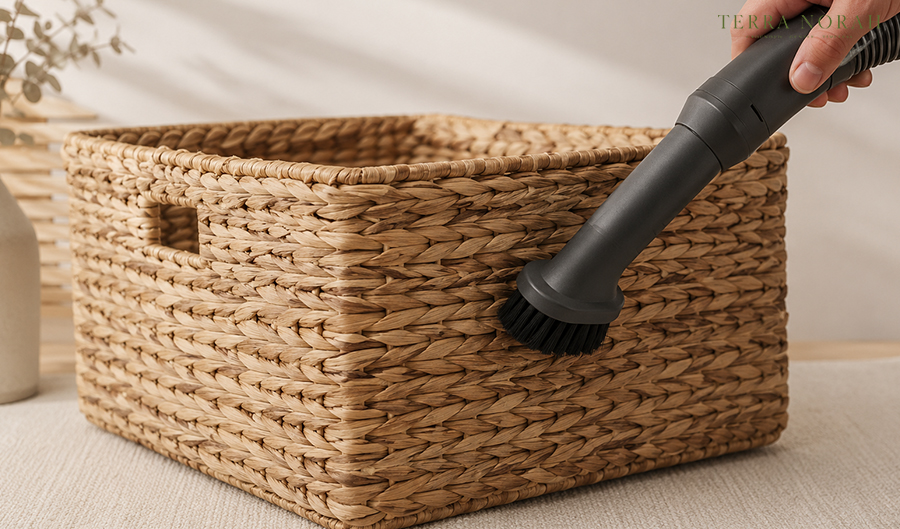
- Step 3. Vacuum the weave. Use the brush attachment on low suction and work in the direction of the braid, not against it. Pay attention to the base and the inside corners, which collect the most. If your vacuum feels too aggressive, a dry brush works just as well and gives you more control.
- Step 4. Brush out the tight spots. Handles, rims, and any lattice or open weave trap dust that suction misses. A dry toothbrush gets into these in seconds.
That is the whole routine. Done regularly, you will rarely need anything more.
Spot cleaning spills and marks
For a specific mark, food spill, or sticky patch, work small and dry it fast.
- Step 1. Blot, do not rub. If the spill is fresh, press a dry cloth onto it to lift as much liquid as possible. Rubbing pushes it deeper into the fibre.
- Step 2. Mix a mild solution. A drop of dish soap in a cup of warm water is plenty. Stronger is not better here.
- Step 3. Wring the cloth almost dry. This is the step people skip. The cloth should be barely damp, not wet enough to drip. If you can squeeze water out of it, wring it again.
- Step 4. Wipe the affected area only. Work with the grain of the weave, in short strokes. Do not clean the whole basket when only one patch needs it.
- Step 5. Wipe again with a clean damp cloth to lift any soap residue, then immediately go over it with a dry cloth.
- Step 6. Air-dry fully before use. Put it somewhere with moving air for a few hours. This matters more than the cleaning itself.
Deep cleaning: when a basket needs more
Once or twice a year, or when a basket has been in storage, a fuller clean helps.
Follow the routine dusting steps first, then wipe the entire basket, inside and out, with a barely damp cloth and mild soapy water. Work in sections rather than wetting the whole thing at once, so no area stays damp for long. Follow each section immediately with a dry cloth.
Then dry it properly, which is the part that actually determines whether this goes well:
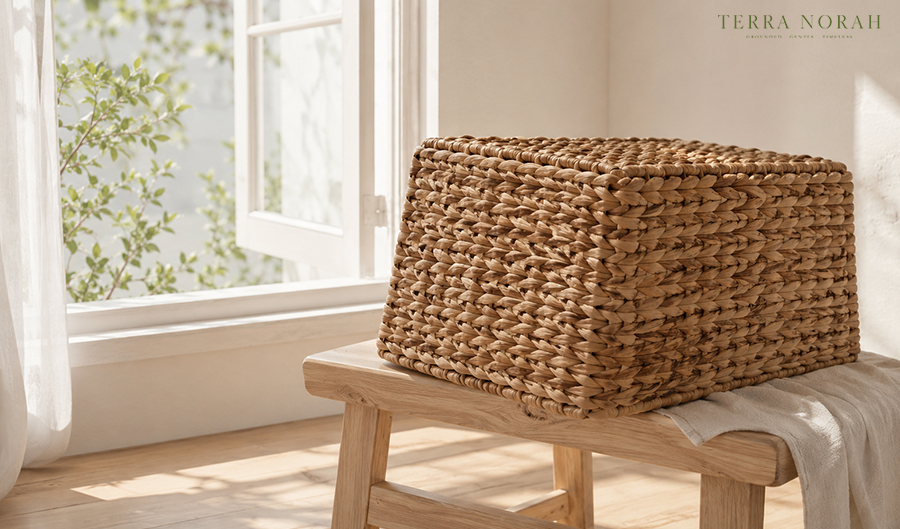
- Set it somewhere with moving air, near an open window or a fan
- Turn it every hour or so, including upside down, so the base dries too
- Allow several hours, or overnight for a large or deep basket
- Avoid direct sun and direct heat. Sun fades the natural colour, and radiators or hairdryers dry the outer fibres too fast, making them brittle and prone to cracking
Gentle airflow at room temperature is always better than fast heat.
How to remove mould from a woven basket
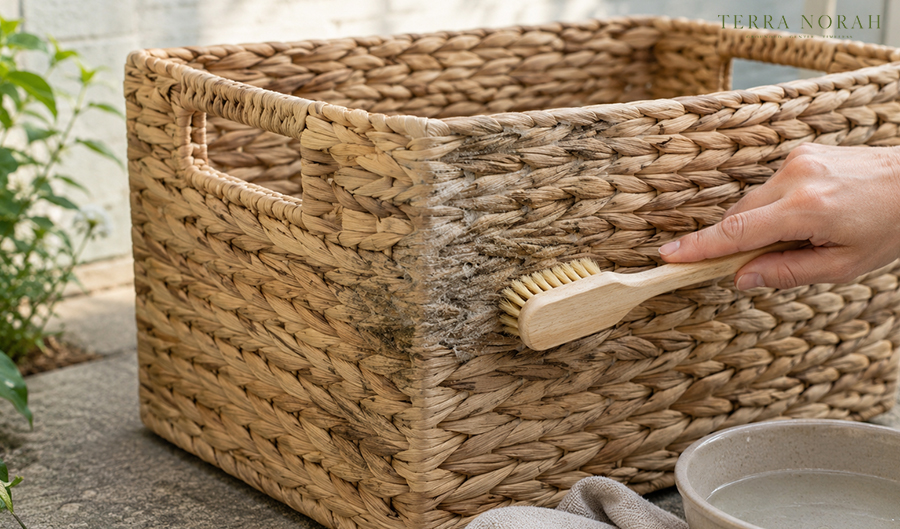
Mould appears as fuzzy grey, green, or white patches, often with a musty smell, and it usually means the basket sat somewhere damp or was put away before it was fully dry.
- Step 1. Take it outside. Brushing mould indoors just spreads spores around the room.
- Step 2. Brush off the surface growth with a dry brush while wearing a mask if you are sensitive.
- Step 3. Wipe with a diluted vinegar solution. Mix equal parts white vinegar and water, dampen a cloth, wring it out well, and wipe the affected areas. Vinegar handles mould without the harshness of bleach, which can discolour natural fibre.
- Step 4. Dry it thoroughly and quickly. Somewhere airy, ideally with a fan. Outdoors in shade with a breeze is ideal. Do not put it back into use until it is completely dry to the touch, including the base.
- Step 5. Fix the cause, not just the symptom. Mould returns unless the conditions change. Move the basket somewhere better ventilated, keep it off damp floors, and stop storing anything damp inside it.
If mould has gone deep into the weave and the fibre feels soft or brittle, the basket is usually past saving. That is uncommon and almost always follows prolonged damp storage.
Dealing with a musty smell
A musty smell without visible mould usually means moisture is still present somewhere in the weave.
Start with a few days somewhere dry and airy, which resolves most cases on its own. If the smell persists, wipe the interior with a diluted vinegar solution using the barely-damp method and dry it fully. Vinegar smell fades within a day.
For lingering odour, put a small open container of baking soda inside the basket, leave it somewhere dry for two or three days, then vacuum out any residue. It is slow but it works, and it does nothing to harm the fibre.
What not to do
These are the mistakes that cause real damage:
- Do not soak or submerge. Already covered, but it is the leading cause of ruined baskets.
- Do not use a pressure washer or hose. Same problem, more force.
- Do not put it in a washing machine or dishwasher. It will not survive.
- Do not use bleach or harsh chemicals. They strip and discolour natural fibre. Vinegar handles mould perfectly well.
- Do not dry with direct heat. Radiators, hairdryers, and hot sun make fibres brittle and cause cracking.
- Do not scrub hard. Aggressive brushing frays the braid. Light pressure, repeated, works better.
- Do not put it away damp. This causes more problems than everything else on this list.
Preventing problems in the first place
Cleaning is easier when there is less to clean:
Use a cloth liner for anything small, loose, damp, or food-related. It takes the wear instead of the weave and can go in the wash.
Keep baskets off consistently damp surfaces and out of the splash zone in bathrooms and kitchens.
Rotate and reposition occasionally so one side is not always pressed against a wall where air cannot circulate.
Let anything damp dry first before it goes in. Wet towels, damp shoes, and just-washed produce are the usual culprits.
Dust regularly rather than thoroughly. Two minutes every few weeks beats an hour once a year.
How often should you clean?
As a rough guide: dust or vacuum every two to four weeks, spot clean spills immediately, deep clean once or twice a year, and check baskets in humid rooms monthly for early signs of damp.
Baskets in low-traffic spots need far less. A blanket basket in a dry living room may go months between cleans without any issue.
Looking after your baskets long term
Cleaned and kept dry, handwoven water hyacinth lasts for years and develops a warmer tone with age. Almost every problem people have with natural fibre baskets traces back to moisture, and almost all of it is preventable with the habits above.
At Terra Norah, our baskets are handwoven from natural water hyacinth and built for everyday use. Look after them well and they will keep doing their job long after a plastic bin would have cracked.
Explore our handwoven [water hyacinth baskets] and bring home storage that lasts.
Frequently Asked Questions
Can you wash water hyacinth baskets with water?
Only with a barely damp cloth. Never soak, submerge, hose, or machine wash them. Water trapped in the weave causes mould and loosens the fibres permanently.
How do you remove mould from a water hyacinth basket?
Brush off surface growth outdoors, wipe with equal parts white vinegar and water using a well-wrung cloth, then dry thoroughly in moving air. Move the basket somewhere better ventilated afterwards.
Why does my woven basket smell musty?
It has been damp. Dry it out in an airy spot for a few days. If the smell remains, wipe with diluted vinegar and dry fully, or leave baking soda inside for a few days.
Can I use bleach on a woven basket?
No. Bleach discolours and weakens natural fibre. Diluted white vinegar handles mould without the damage.
How do you dry a water hyacinth basket properly?
In moving air at room temperature, turned occasionally so all sides dry, including the base. Avoid direct sun and direct heat, which make fibres brittle.
How often should water hyacinth baskets be cleaned?
Dust or vacuum every two to four weeks, spot clean spills straight away, and deep clean once or twice a year. Check more often in humid rooms.