

Showing 1–12 of 17 results


Handwoven water hyacinth baskets for every room, made for daily use and good enough to leave on display. Our collection runs from shallow catchalls and serving trays to deep floor baskets for blankets and laundry, available as single pieces and nesting sets.
Every basket is woven by hand from sustainably harvested water hyacinth, a fast-renewing natural fibre and a genuine alternative to plastic storage. Browse the full range below, or jump straight to the room you are organizing.
Not all woven baskets do the same job, and buying the wrong shape is the most common mistake people make. Our water hyacinth baskets fall into five broad groups, each suited to a different kind of storage.
Floor baskets are the largest, designed to sit beside a sofa, at the foot of a bed, or in a corner. These are what you want for blankets, throws, cushions, laundry, and larger toys. Depth is the point here, and side handles matter because a full floor basket gets moved more than you expect.
Storage baskets are the mid-size workhorses: rectangular, structured, and made to line up on shelves or slide into cabinets. They suit pantries, closets, bathrooms, and nurseries, where a consistent look across a whole shelf does more for a room than any single decorative piece.
Shallow baskets and trays stay low and open, which is exactly what a counter, vanity, or coffee table needs. Anything you use daily should live in a shallow container, because deep ones turn into places where small items disappear.
Narrow baskets solve the awkward gaps: behind a tap, along the back of a console, on a toilet tank, or in a spice rack. Standard sizes rarely fit these spots, which is why a slim profile is worth having in the mix.
Organizers and caddies are the divided pieces, made for cutlery, utensils, and small items that need separating rather than piling.
The quickest way to narrow things down is to think about where it will live.
Living room. Go deep and wide. A floor basket beside the sofa handles blankets and throws, while a shallow tray on the coffee table keeps remotes, coasters, and candles from spreading. These two pieces cover almost every living room storage problem.
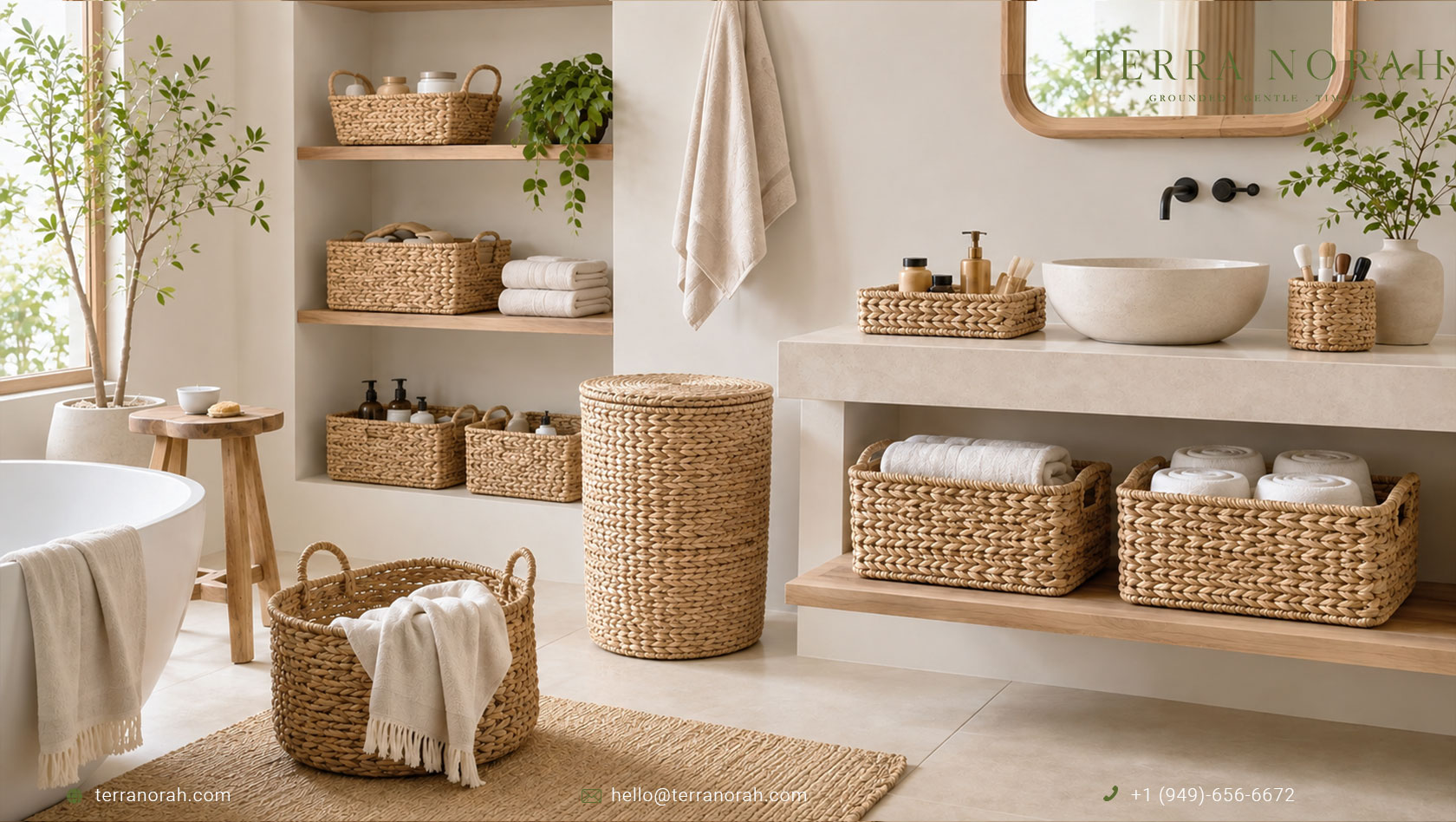
Bathroom. Stay shallow and stay out of the splash zone. Vanity trays and slim counter baskets hold skincare, soaps, and cotton pads, while a deeper basket suits rolled towels. Ventilation matters more than anything else here, so keep baskets away from the shower and let the room dry out.
Kitchen and pantry. Structured rectangular baskets line up on pantry shelves and let you sort by category. A shallow bowl works for fruit and produce, since the open weave lets air move around what is inside. Divided caddies keep utensils and cutlery sorted on the counter.
Bedroom and closet. A large basket at the foot of the bed holds spare blankets. On closet shelves, a nesting set sorts folded clothes, linens, and accessories with a uniform look. A small tray on the nightstand gathers jewellery, glasses, and the things you empty from your pockets.
Entryway. One shallow catchall for keys and mail, one deep basket for shoes. Two containers is usually the right number, because a third in a narrow hallway adds visual clutter faster than it removes it.
Round water hyacinth baskets read softer and work well as decorative pieces or in corners where a square edge would feel harsh. They are the usual choice for blankets, plants, and anywhere the basket itself is part of the look.
Rectangular water hyacinth baskets are the more efficient shape. They use shelf space properly, sit flush against walls, and line up neatly in rows. If your priority is storage capacity rather than a decorative silhouette, rectangular almost always wins.
Oval and belly shapes sit between the two, offering the volume of a round basket with a bit more presence. These work particularly well as floor baskets.
Trapezoid and tapered shapes are slightly wider at the top, which makes reaching in easier and lets baskets nest together compactly.
When it comes to size, measure before you buy. The most common regret is a basket that overhangs a console or does not fit the shelf it was bought for. Check depth as well as width, especially for shelves and cube units.
Handles are not just decoration, and the type affects how a basket actually works.
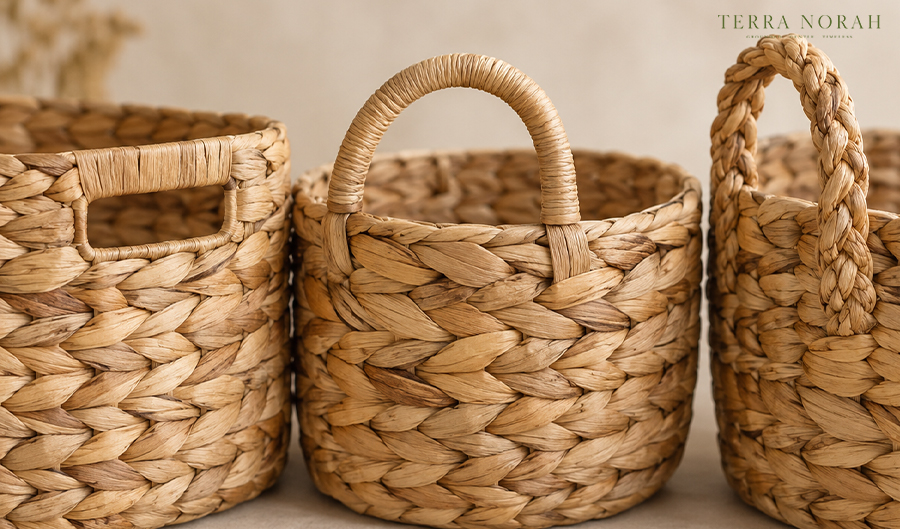
Cut-out handles are openings woven into the body. They keep the outer shape flush, which is what you want for baskets that slide into shelving or cabinets. Nothing sticks out to catch.
Rope or braided loop handles sit raised above the rim. They are easier to grip and better for baskets you carry regularly, and they add a handcrafted detail that reads as decorative.
Wooden handles give a contrasting natural finish and a firm grip, usually on smaller carry baskets.
No handles suits anything that stays put. A counter or vanity basket does not need handles, and going without gives a cleaner, more seamless look in a visible spot.
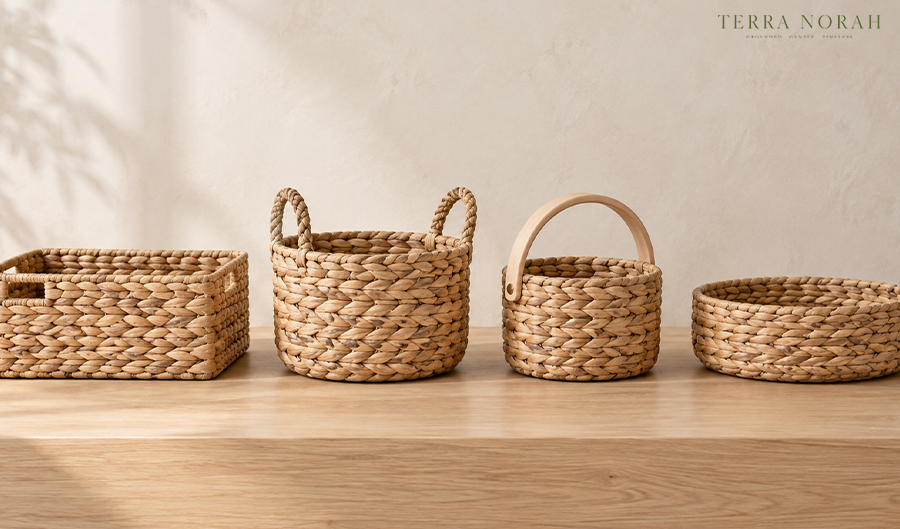
A nesting set gives you several sizes in one purchase and stores compactly when you are not using them all, which makes it the better value if you are organizing a whole shelf, closet, or room. Sets also give a coordinated look that single pieces bought over time rarely achieve.
Single baskets make more sense when you have one specific problem to solve: a catchall for the entryway, a tray for the coffee table, a caddy for utensils. Buy the piece that fits, rather than a set where two of the sizes end up unused.
The differences between a good basket and a cheap one show up after a few months rather than on day one.
Look for a tight, even weave with no loose or fraying strands. A dense braid holds its shape whether the basket is full or empty, while a loose one starts to sag.
Check how the handles attach. Handles woven or lashed into the body outlast glued-on handles, which pull away under weight. This is the single most common failure point in inexpensive baskets.
A flat, sturdy base should keep the basket level when loaded rather than bowing outward. Set it on a flat surface and press down to see whether it holds.
Some baskets are built over an internal frame, which helps rigid shapes like cubes and structured boxes keep their form. Others rely on the weave alone, which suits softer, rounded pieces.
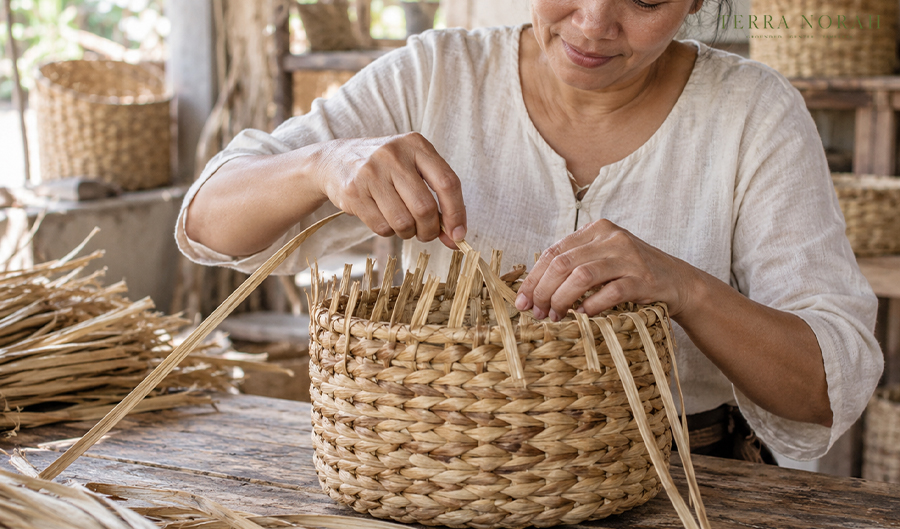
Water hyacinth is a fast-growing aquatic plant, dried and braided by hand into a warm golden fibre. It is renewable, fully biodegradable, and woven without chemical treatment, which makes it a straightforward upgrade from plastic bins.
It is also more durable than people expect. A tightly woven basket handles blankets, laundry, toys, and everyday clutter for years. The one real limitation is moisture. Water hyacinth does not like sitting in water or living somewhere damp with no airflow, so keep baskets in dry, ventilated spots, wipe rather than soak them, and let anything damp dry fully before it goes inside.
Because each piece is handwoven, no two are identical. Slight variations in tone, weave, and size are normal and are the mark of genuine handmade work rather than a fault.
Every basket in this collection is made by hand by skilled artisans, not stamped out by machine. Terra Norah keep the range focused on pieces that earn their place in a home: storage that works hard and still looks good sitting in the open.
Browse the full collection above, or shop by room to see what fits your space.
What are water hyacinth baskets used for? Storage and display in every room: blankets and laundry in floor baskets, pantry and closet items in structured baskets, daily essentials in shallow trays, and cutlery in divided caddies.
Are water hyacinth baskets durable? Yes. A tightly woven basket holds its shape and handles daily use for years. Keep it dry and out of standing water, and it will last.
Can I use them in the bathroom or kitchen? Yes, in a ventilated space and out of the splash zone. Keep baskets away from the shower and sink, and use a liner for anything damp or food-related.
What size basket should I buy? Measure your space first, including depth. Go deep for blankets and laundry, structured and rectangular for shelves, shallow for counters and vanities, and slim for narrow gaps.
Is a nesting set better than a single basket? A set is better value if you are organizing a whole shelf or room and gives a coordinated look. A single basket makes more sense for one specific spot.
How do I clean a water hyacinth basket? Wipe with a dry or lightly damp cloth and air-dry fully. Never soak or machine wash, since trapped moisture causes mould and loosens the weave.
