
If you’re shopping for natural woven decor, you’ve probably run into the same four names again and again and wondered how they actually differ. This guide breaks down water hyacinth vs seagrass vs rattan vs jute: what each one is, how it looks and feels, what it’s best used for, and how to choose the right natural fiber for your home. They may all look “woven and natural,” but each has its own character.
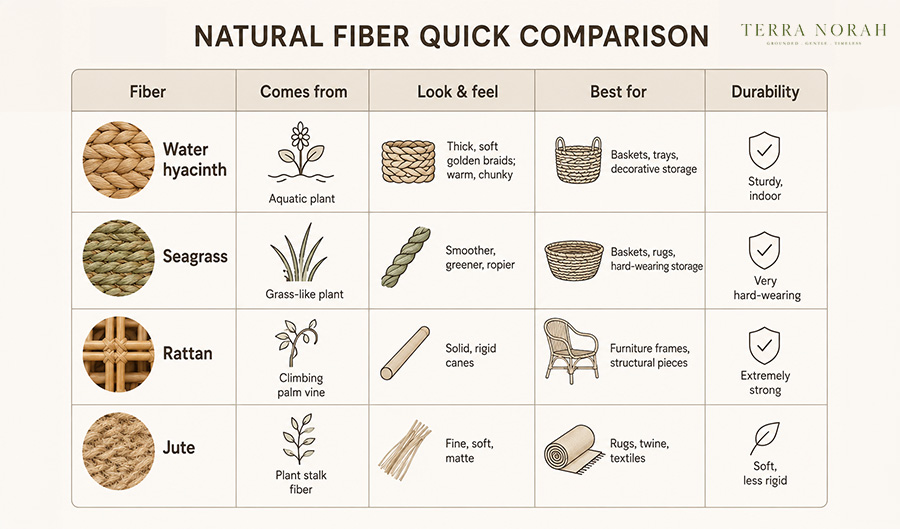
Quick comparison at a glance
| Fiber | Comes from | Look & feel | Best for | Durability |
|---|---|---|---|---|
| Water hyacinth | Aquatic plant | Thick, soft golden braids; warm, chunky | Baskets, trays, decorative storage | Sturdy, indoor |
| Seagrass | Grass-like plant | Smoother, greener, ropier | Baskets, rugs, hard-wearing storage | Very hard-wearing |
| Rattan | Climbing palm vine | Solid, rigid canes | Furniture frames, structural pieces | Extremely strong |
| Jute | Plant stalk fiber | Fine, soft, matte | Rugs, twine, textiles | Soft, less rigid |
What is water hyacinth?
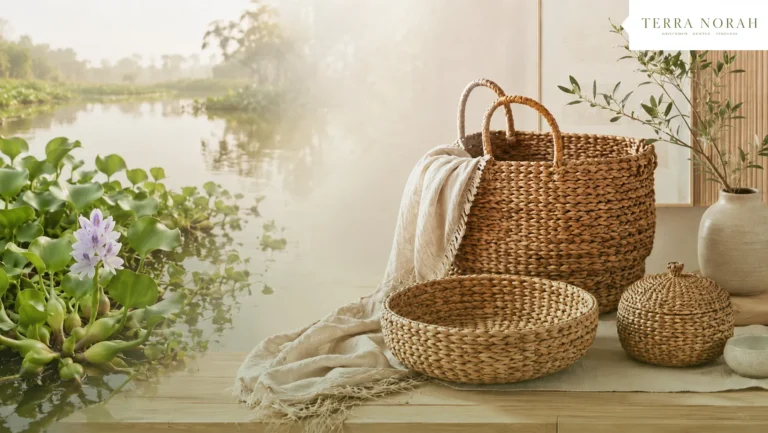
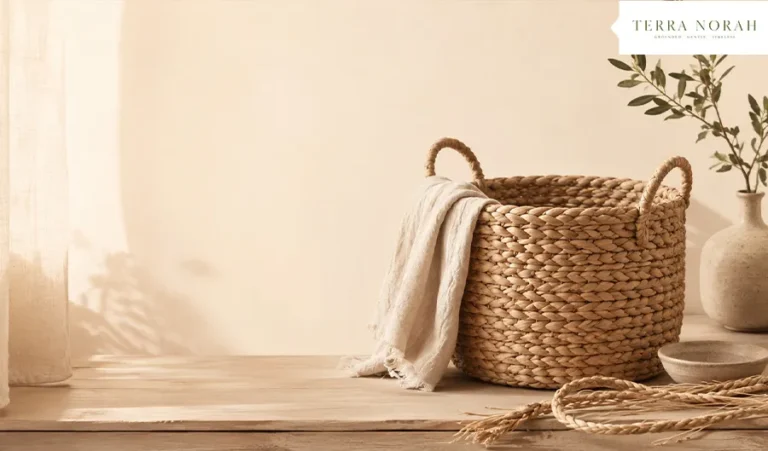
Water hyacinth is a fast-growing aquatic plant whose stems are dried and braided into thick, soft ropes. The result is a warm golden weave with a chunky, tactile texture that feels substantial and looks handcrafted. It’s the go-to fiber for decorative baskets, trays, and storage pieces where you want softness and visual warmth. Because it’s a natural plant fiber, it prefers dry indoor spaces. (For the full story, see our [complete guide to water hyacinth].)
What is seagrass?
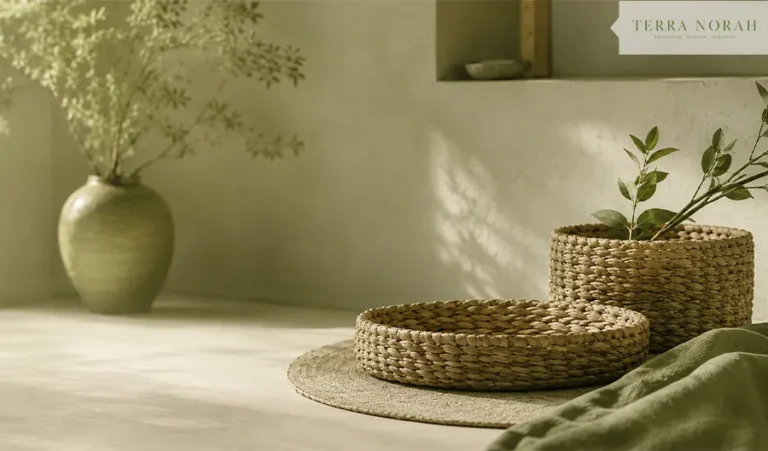
Seagrass is a grass-like plant, often grown in coastal or paddy areas, that’s twisted into smooth, ropey strands. Compared to water hyacinth, it has a slightly greener tone, a smoother surface, and a tighter, harder finish. Seagrass is prized for being very hard-wearing, which makes it popular for baskets and natural-fiber rugs that take heavy use. It’s a little more water-resistant than most natural fibers, but still belongs indoors.
What is rattan?
Rattan is completely different from the other three it’s not a soft grass but a climbing palm vine with solid, rigid canes. Because it can be bent under heat and holds its shape, rattan is the material of choice for furniture frames: chairs, headboards, and structural pieces. You won’t find soft woven storage baskets made purely of rattan the way you do with water hyacinth or seagrass, rattan is about structure and strength, not soft braided texture.
What is jute?
Jute is a soft plant fiber taken from the stalks of the jute plant. It’s fine, matte, and flexible rather than rigid, which is why you’ll usually see it in rugs, twine, macramé, and textiles rather than structured baskets. Jute adds a soft, earthy layer to a room, but it doesn’t hold a firm shape, so it’s not the pick for a basket that needs to stand on its own.
Water hyacinth vs seagrass: the closest comparison
Since water hyacinth vs seagrass is the question most shoppers actually have they’re the two most alike — here’s how they really differ:
- Texture: water hyacinth is thicker, softer, and chunkier; seagrass is smoother, tighter, and ropier.
- Color: water hyacinth is a warm golden-brown; seagrass leans slightly greener and paler.
- Feel: water hyacinth reads as soft and decorative; seagrass reads as crisp and utilitarian.
- Durability: seagrass is a touch more hard-wearing; water hyacinth wins on warmth and visual softness.
For decorative storage baskets and trays where you want a warm, handcrafted look, water hyacinth is usually the more beautiful choice. For heavy-duty rugs or ultra-durable baskets, seagrass has an edge. Many people actually prefer them together water hyacinth for the pieces on display, seagrass for the hardest-working spots.
Which natural fiber should you choose?
It comes down to what you’re furnishing:
- Decorative baskets, trays, storage you’ll display → water hyacinth (warmth + soft texture)
- Hard-wearing baskets or natural rugs → seagrass
- Furniture frames and structural pieces → rattan
- Rugs, runners, and soft textiles → jute
All four are renewable, biodegradable, and eco-friendly so whichever you choose, you’re picking a natural material over plastic. (Curious how green they really are? Read [is water hyacinth sustainable?])
Why we choose water hyacinth at Terranorah
At Terranorah, we work with water hyacinth because it strikes the best balance for home decor: warm, tactile, sturdy, and genuinely sustainable. Handwoven by skilled artisans, each piece brings soft natural texture that seagrass, rattan, and jute simply can’t match for decorative storage.
Explore our handwoven [water hyacinth collection] and bring home warm, natural texture that lasts.
Frequently Asked Questions
Is water hyacinth better than seagrass?
For decorative, warm-textured baskets and trays, water hyacinth is usually preferred; for maximum durability or rugs, seagrass has a slight edge. They’re both excellent natural fibers.
Is water hyacinth the same as rattan?
No. Water hyacinth is a soft braided aquatic-plant fiber for baskets and decor, while rattan is a rigid palm vine used mainly for furniture frames.
Which natural fiber is the most durable?
Rattan is the strongest overall (it’s used for furniture), while seagrass is the most hard-wearing among the soft woven fibers.
Are all these fibers eco-friendly?
Yes water hyacinth, seagrass, rattan, and jute are all renewable, biodegradable, plant-based materials and greener than synthetic alternatives.
Can water hyacinth get wet?
It’s best kept dry. Like most natural fibers, prolonged damp can cause mold, so wipe spills promptly and keep pieces in ventilated indoor spaces.