
An exploration of ecological transformation, traditional artisanship, and how TerraNorah turns an environmental crisis into timeless, sustainable interior luxury.
The global demand for sustainable interior design has driven modern homeowners to seek materials that balance aesthetic elegance with genuine ecological responsibility. However, few materials possess a backstory as compelling, transformative, and environmentally impactful as water hyacinth. Known scientifically as Eichhornia crassipes, this aquatic plant with deceptive lilac blossoms has spent decades earning a reputation as a severe ecological hazard. Today, a visionary movement in sustainable manufacturing is completely flipping this narrative. By understanding the deep complexities of the water hyacinth invasive crisis, ethical brands like TerraNorah are successfully turning an aggressive environmental threat into beautiful, handcrafted home decor that elevates modern living spaces.
The Root of the Crisis: Why Is Water Hyacinth Invasive?
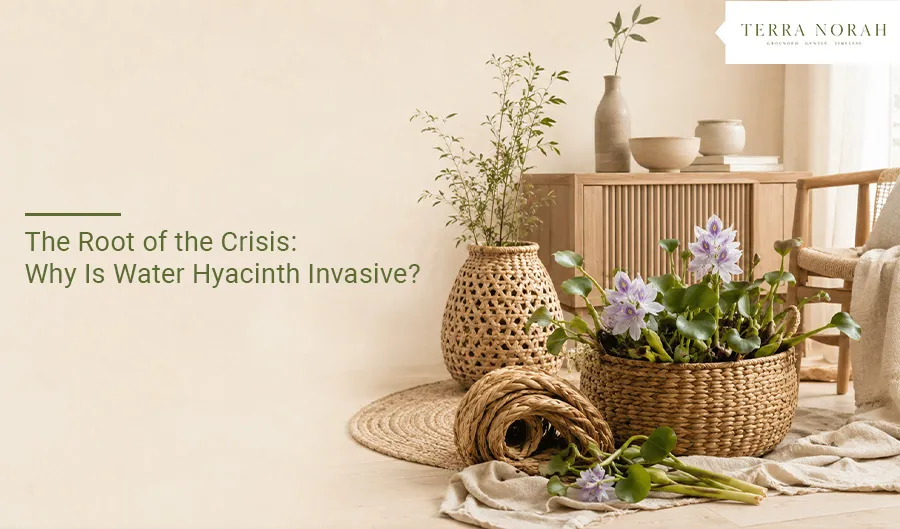
To truly appreciate the incredible value of a woven basket or an intricately detailed placemat, one must first understand the sheer scale of the ecological disruption caused by this fast-growing aquatic plant. Native originally to the Amazon Basin, the plant was introduced globally during the late 19th and early 20th centuries as an ornamental addition to botanical gardens and private ponds. Its striking, violet-tinted flowers and glossy green leaves made it an immediate favorite among horticulturists. Nevertheless, outside its natural ecosystem, where predatory insects and specific hydrological cycles keep its population in check, the plant transformed rapidly into a biological nightmare.
The biological mechanisms that render the water hyacinth invasive are exceptionally formidable. Under optimal tropical and subtropical conditions, the plant can double its biological mass in less than two weeks. This exponential growth rate allows massive carpets of thick vegetation to form across rivers, natural lakes, agricultural canals, and crucial water reservoirs. These dense, interlocking mats completely block natural sunlight from penetrating the water surface, effectively halting photosynthesis for underwater flora. As a direct consequence, dissolved oxygen levels collapse dramatically, leading to catastrophic die-offs of native fish species and the systematic degradation of complex aquatic ecosystems.
“Ecologists classify the water hyacinth invasive expansion as one of the top ten worst weeds in the world. It disrupts not just marine life, but the economic survival of thousands of riverine communities.”
The Socio-Economic Toll on River Communities
Beyond the obvious and devastating ecological consequences, the economic burden imposed by this aggressive green plague is profound. For communities that depend fundamentally on freshwater ecosystems for transportation, commercial fishing, and agricultural irrigation, an unmanaged infestation can mean immediate financial ruin. Large mats of tangled vegetation physically obstruct fishing boats, destroy expensive nets, and choke off access to local marketplaces.
Furthermore, these stagnant, weed choked waters create the absolute perfect breeding ground for disease carrying mosquitoes and parasitic snails. Irrigation channels become blocked, severely diminishing agricultural yields for essential crops like rice. Millions of dollars are spent annually by municipal governments trying to deploy mechanical harvesters or expensive, toxic chemical herbicides. Unfortunately, these short-term solutions often yield very little long-term success. Chemical treatments run the high risk of further poisoning fragile aquatic environments, while mechanical harvesting generates immense piles of heavy, wet plant waste that simply rot on riverbanks, releasing large amounts of greenhouse gases into the atmosphere.
The Turning Point: Economic Utilization as Ecological Defense
Faced with the continuous failure of traditional eradication methods, conservationists and innovative designers arrived at an ingenious realization: the only viable way to manage the water hyacinth invasive crisis is to create a sustainable, high-value demand for the plant itself. By viewing this aggressive weed as an abundant, free, and completely renewable source of natural cellulose fiber, we can incentivize continuous manual harvesting. This approach effectively converts an expensive ecological management problem into a highly productive source of local income.
This strategy forms the absolute foundation of the modern eco-luxury design philosophy. When handled with care, the long, fibrous stalks of the plant can be dried, processed, and woven into structural materials that easily rival rattan, seagrass, or willow in both durability and aesthetic warmth. Manual harvesting physically extracts the embedded nutrients (like nitrogen and phosphorus) from polluted waterways, helping to naturally restore the chemical balance of the water while giving native biodiversity a vital chance to recover.
From Wet Weed to Luxury Weave: The TerraNorah Craftsmanship Process
At TerraNorah, the physical transformation of raw, destructive biomass into sophisticated home accessories is treated as both a precise science and a celebrated art form. The lifecycle of each artisan piece involves meticulous steps designed to guarantee premium product longevity while maximizing environmental benefits.
1. Strategic and Ethical Harvesting
The process begins directly in heavily affected waterways, where local harvesters carefully extract the mature plants by hand. Removing these plants clears localized navigation paths and reintroduces sunlight to the underlying water layers. Only the longest, thickest stalks are selected for premium product development, ensuring the structural integrity of the final weave.
2. Chemical-Free Sun Drying
Once harvested, the leafy tops and roots are removed, leaving only the nutrient-rich, fibrous stalks. These stalks are transported to drying fields, where they are laid out under the natural sun for days. As the moisture evaporates, the stalks shrink, harden, and transform into flexible, durable ribbons with a gorgeous, naturally warm golden tan tone. TerraNorah strictly avoids harmful chemical bleaching agents, relying entirely on natural sunlight to cure the fibers safely.
3. Deep Material Curing and Anti-Mold Treatment
A common concern with any natural, organic fiber home decor item is its vulnerability to ambient moisture and mold. To solve this, the dried stalks undergo a specialized, eco-friendly heat-treating and curing process. This completely eliminates any residual microscopic organisms or moisture trapped deep within the fiber walls, ensuring that the processed water hyacinth invasive material remains completely clean, resilient, and safe for international shipping and long-term indoor use.
4. Master Artisan Intricate Weaving
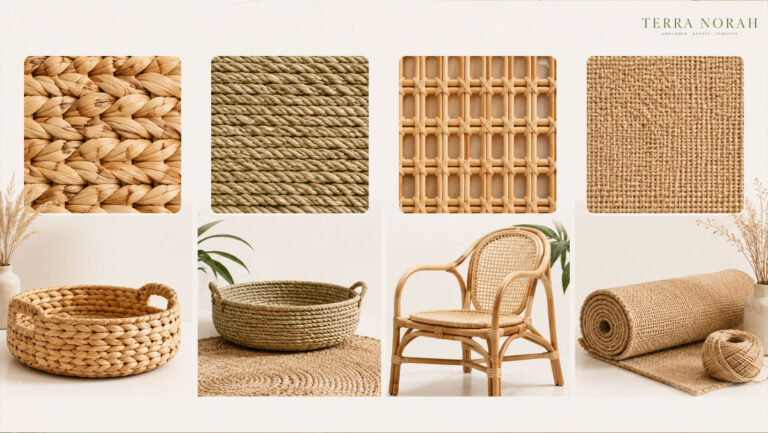
The cured fibers are then handed over to master artisans who have kept traditional hand weaving heritage alive for generations. Utilizing specialized techniques like the fishbone weave, checkerboard pattern, or twisted rope method, these artisans handcraft each individual item around sturdy, rust-resistant metal frames. The result is a collection of home decor products that are completely unique, structurally sound, and rich with human history.
Why the Water Hyacinth Invasive Fiber is a Modern Design Triumph
Integrating home goods made from this reclaimed material into your living space offers a multitude of distinct advantages that go far beyond basic aesthetics. It represents a rare intersection where high-end design principles align perfectly with radical environmental restoration.
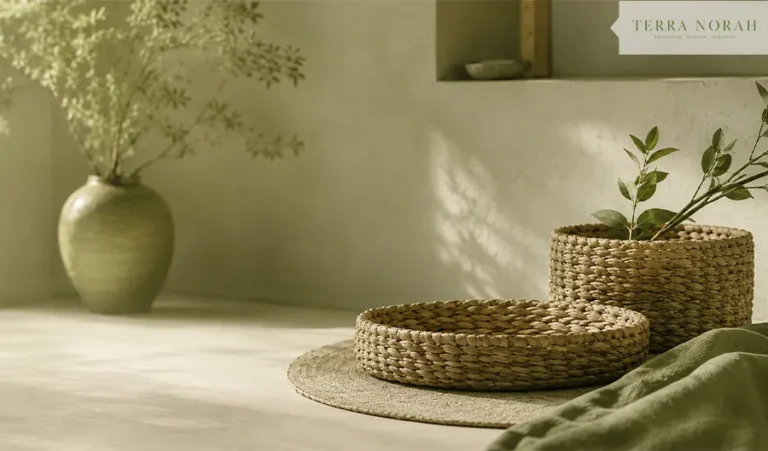
First and foremost, the material provides a stunning, multi-dimensional tactile experience. The organic variations in color-ranging from soft cream to deep, honeyed ochre add instant depth and warmth to a wide variety of interior styles, including Minimalist, Bohemian, Coastal, and Organic Modern design. A large woven storage trunk or a set of structured dining placemats acts as a gorgeous grounding element, breaking up the cold monotony of modern materials like industrial concrete, glass, and metals.
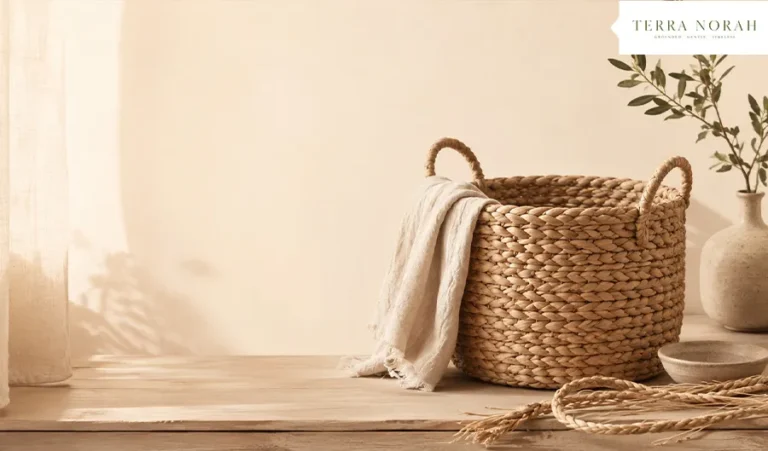
Secondly, the structural characteristics of the fiber are highly remarkable. Because the plant’s internal structure is naturally lightweight yet inherently thick and spongy, the woven products possess an excellent shock-absorbing quality. They are highly resilient against everyday wear and tear, making them ideal for heavy-use items like laundry hampers, entryway organizing baskets, and daily dining table mats.
“By selecting products made from the water hyacinth invasive plant, conscious consumers actively participate in a carbon-negative manufacturing cycle that heals ecosystems instead of depleting them.”
Empowering Communities Through Conscious Commerce
The choice to purchase from TerraNorah extends your positive impact far beyond environmental cleanup. The harvesting and complex weaving of this material provide stable, fair-wage employment opportunities for rural communities, particularly for women who can comfortably balance weaving work with their domestic lives.
By establishing a reliable, premium market for these products, TerraNorah helps transform an environmental liability into a steady engine for local economic empowerment. This sustainable financial model preserves historical handicraft techniques that are rapidly being lost to cheap, mass-produced plastic alternatives, ensuring that ancestral skills are valued, celebrated, and passed down to future generations.
Conclusion: Redefining Luxury for a Better Planet
The extraordinary journey from a destructive, suffocating weed to a refined, high-end home accessory proves that thoughtful human ingenuity can successfully solve complex ecological crises. The water hyacinth invasive threat remains a major global challenge, but through targeted, creative utilization, we can systematically heal our vital waterways one harvest at a time.
When you choose to style your home with beautifully crafted pieces from TerraNorah, you are not simply buying a beautiful piece of furniture or an elegant storage basket. You are actively investing in a cleaner planet, supporting fair-trade artisan livelihoods, and bringing a deeply meaningful story of ecological redemption into the very heart of your modern home.