
If you’re shopping for natural-fiber decor with a clear conscience, you’ve probably asked the obvious question: is water hyacinth sustainable, or is it just another material with a green label slapped on top? The short answer is that water hyacinth is one of the genuinely eco-friendly materials in home decor today — and the reasons go deeper than most shoppers realize. Here’s the honest breakdown.
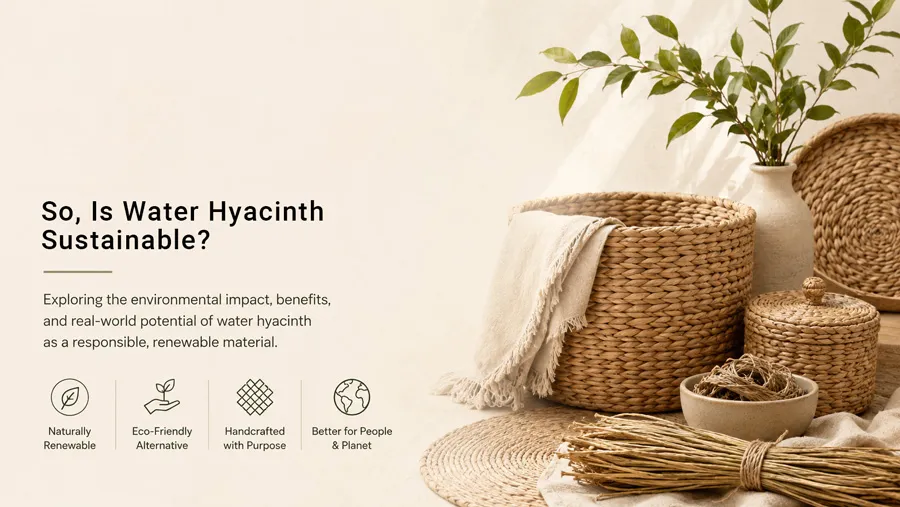
So, Is Water Hyacinth Sustainable?
Yes. Water hyacinth is highly sustainable, and unusually so. It’s a fast-growing aquatic plant that regrows faster than almost any material can be used up, it breaks down naturally at the end of its life, and harvesting it actually helps the environment rather than depleting it. Few decor materials can claim all three at once.
To understand why, it helps to look at how this plant grows and how it’s turned into the baskets and trays you see in stylish homes. (For the full picture, see our [complete guide to water hyacinth].)
Why Water Hyacinth Is an Eco-Friendly Material
Several qualities come together to make water hyacinth an eco-friendly choice:
- Rapidly renewable. Water hyacinth is famous for doubling in size within days. That relentless growth means harvesting it never strains supply the way slow-growing hardwoods or rattan can. The plant simply grows back.
- 100% biodegradable. A water hyacinth basket is made from natural plant fiber, so at the end of its long life it returns to the earth — unlike a plastic storage bin that lingers in landfill for centuries.
- No harsh chemicals. The dried fiber is naturally flexible and strong, so artisans can weave it without chemical treatment or heavy processing.
- Low-impact, handmade. Each piece is woven by hand rather than produced in an energy-hungry factory, keeping its carbon footprint low.
- Supports rural communities. Hand-weaving water hyacinth provides income and preserves traditional craft skills in the regions where the plant grows.
Put together, that’s a material that’s renewable, clean to produce, biodegradable, and socially positive — a rare combination.
How Harvesting Water Hyacinth Helps the Environment
Here’s the part that makes water hyacinth genuinely unusual among sustainable materials: harvesting it is good for the waterways.
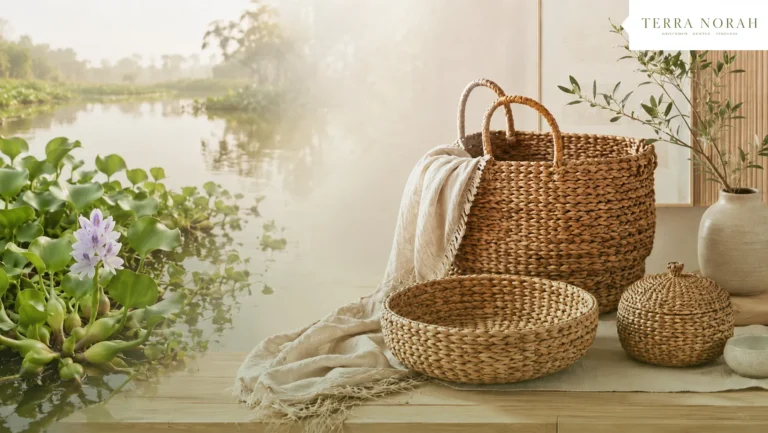
Water hyacinth grows so aggressively that in many regions it’s classed as an invasive species. Left unchecked, it blankets rivers and lakes, blocks sunlight, starves the water of oxygen, and crowds out native plants and fish. When artisans harvest the plant by hand to weave it, they’re also clearing congested waterways and helping restore the local ecosystem.
So instead of extracting a scarce resource, buying water hyacinth decor turns an environmental problem into something useful and beautiful. (Read the full story of how it went from invasive weed to home decor.)
Water Hyacinth vs Plastic Storage
The clearest way to see the eco benefit is to compare a water hyacinth basket with the plastic bin it usually replaces:
- Plastic bins are made from fossil fuels, can take hundreds of years to break down, and shed microplastics as they age.
- Water hyacinth baskets are made from a renewable plant, biodegrade naturally, and look far better doing the same job.
Swapping even a few plastic organizers for woven baskets is a small, lasting step toward a less plastic home — and it’s one of the easiest sustainable upgrades you can make.
Is Water Hyacinth Greener Than Other Natural Fibers?
Water hyacinth holds up well against other popular natural materials. Seagrass, rattan, and jute are all renewable too, but water hyacinth’s standout advantage is its growth speed and the waterway-clearing benefit of harvesting it — few fibers come with a built-in environmental upside like that. It also has a warmer, softer woven look that many people prefer. (For a side-by-side comparison, read [water hyacinth vs seagrass, rattan and jute].)
Sustainability Also Means Making It Last
The greenest product is the one you don’t have to replace. A well-made water hyacinth piece is genuinely durable, and a little care keeps it looking good for years — which is sustainability in action:
- Wipe with a dry or lightly damp cloth.
- Keep it out of standing water and persistently damp spots.
- Air-dry fully if it ever gets wet, to prevent mold.
Treat your basket well and it will serve you for a long time, which is the whole point of buying something natural and lasting rather than disposable. (See our guide on [how to clean and care for water hyacinth baskets].)
Choose Sustainable Decor with Terranorah
Sustainability shouldn’t mean compromising on style — and with water hyacinth, it doesn’t. You get warm, tactile, beautiful pieces and a material that’s renewable, biodegradable, and kind to the planet.
At Terranorah, every piece is handwoven from 100% natural water hyacinth by skilled artisans, built to last and made to be lived with. Explore our handwoven [water hyacinth collection] and bring home decor you can feel good about.
Frequently Asked Questions
Is water hyacinth sustainable?
Yes — it’s a rapidly renewable aquatic plant, fully biodegradable, woven without chemicals, and harvesting it helps clear congested waterways.
Is water hyacinth biodegradable?
Yes. It’s 100% natural plant fiber, so it breaks down naturally at the end of its life, unlike plastic.
Is water hyacinth better for the environment than plastic?
Considerably. It’s renewable and biodegradable, while plastic is fossil-fuel based and persists in landfill for centuries.
Does harvesting water hyacinth harm the environment?
No, the opposite. Because the plant is invasive and overgrows waterways, harvesting it helps restore local ecosystems.
Is water hyacinth eco-friendly to produce?
Yes. It’s hand-woven without chemical treatment or heavy machinery, keeping its footprint low.